

 Español
Composite vs Vinyl Fence: Costs, Durability, and Best Fit
News-Content
- 1 Composite vs Vinyl Fence: What You’re Actually Buying
- 2 Durability in Real Climates: Moisture, Sun, and Temperature Swings
- 3 Appearance and Design Options: What Looks “Premium” in Your Setting
- 4 Maintenance and Repairs: What You’ll Do Over 10 Years
- 5 Cost and Long-Term Value: Budgeting with Practical Numbers
- 6 Installation Details That Decide Whether the Fence Performs
- 7 Quick Decision Guide: Which One I Recommend for Common Use Cases
- 8 How We Support Buyers: Specification, Consistency, and Customization
When you’re choosing between a composite and vinyl fence, the “right” answer depends less on marketing claims and more on how your fence will live outdoors: sun exposure, temperature swings, ground moisture, wind, and the look you need to maintain year after year.
As a manufacturer and supplier of wood-plastic composite (WPC) fencing systems, I help buyers specify fencing that performs predictably in real projects—residential boundaries, commercial perimeters, and public spaces. Below is a practical comparison you can use to make a confident material choice and avoid the common pitfalls we see in quotes, installs, and long-term maintenance.
Composite vs Vinyl Fence: What You’re Actually Buying
Both composite and vinyl fencing are engineered materials, but they behave differently because the structure and “system components” differ—not just the boards.
Composite fencing (WPC) in practical terms
Composite fencing typically uses a blend of recycled plastic and wood fibers, formed into fence boards and profiles. In our systems, we focus on consistent density, stable geometry, and surface durability, and we often use capped or co-extruded surfaces to improve resistance to moisture and UV exposure. The result is a fence with a warmer, more wood-like appearance and a more rigid “panel feel” once installed.
Vinyl fencing (PVC) in practical terms
Vinyl fence components are usually extruded PVC profiles—often hollow rails and pickets with internal webs. Vinyl is popular because it looks clean, is easy to wash, and can be cost-effective. However, performance depends heavily on wall thickness, internal reinforcement, and proper installation details that manage thermal movement.
- If you want a fence that mimics wood grain and feels more rigid, composite is often the stronger fit.
- If you want a crisp, uniform look (often white) and a lightweight system, vinyl can be the more direct option.
Durability in Real Climates: Moisture, Sun, and Temperature Swings
Most buyers evaluate “durability” as a single checkbox. In reality, outdoor durability is a set of stress tests that happen every season. Here’s how I frame it when customers ask us to compare composite vs vinyl fence performance.
Moisture and rot risk
Neither composite nor vinyl “rots” like natural wood. Composite’s advantage is that it’s engineered to resist moisture-related swelling and surface degradation, and it’s not a food source for insects. Vinyl is also moisture-resistant, but thin-walled components can be more vulnerable to damage if the install allows water to freeze inside hollow cavities in cold regions.
UV exposure and visible aging
Sunlight is where the materials often separate in appearance over time. Composite systems that use UV stabilizers and capped/co-extruded surfaces tend to hold color and texture more consistently. Vinyl can look excellent for years, but the most common aging complaints we hear about vinyl are surface chalking, visible scuffs, and uneven fading on panels that face strong afternoon sun.
Thermal movement: the “silent” performance factor
Both materials expand and contract, but vinyl generally moves more with temperature. As a rule of thumb, an 8-foot PVC run can shift about 1/8 inch across a 50°F (28°C) temperature swing. That is not a defect—it’s physics. It becomes a problem when rails are trapped too tightly, fasteners are over-driven, or posts are not plumb.
Composite also moves with temperature, which is why we design modular systems and provide installation guidance that maintains spacing and alignment. When the install respects movement, you get straighter lines, fewer callbacks, and better-looking panels through seasonal change.
Appearance and Design Options: What Looks “Premium” in Your Setting
A fence is a long, uninterrupted surface—your eye notices pattern repetition, gloss level, and texture immediately. If aesthetics are a priority, focus on finish realism and how the material handles day-to-day contact (pets, landscaping tools, kids’ sports).
Composite: wood-like texture and modern colors
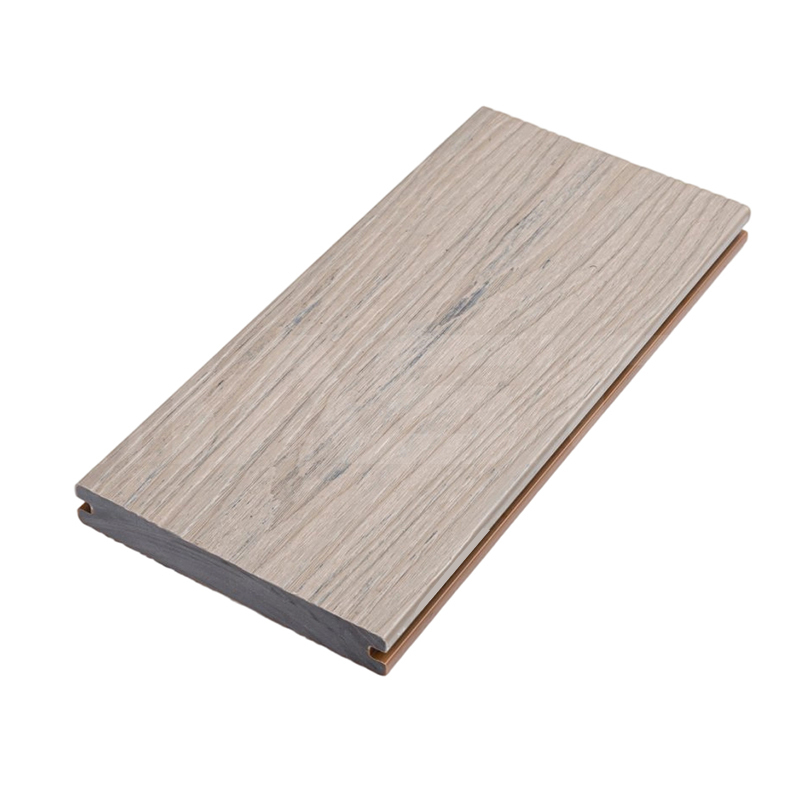
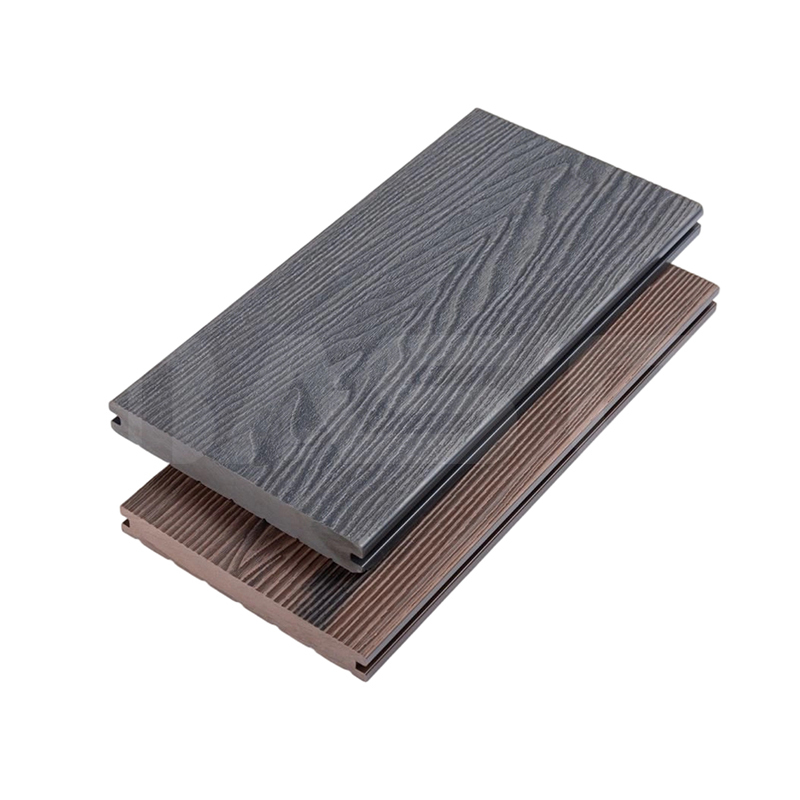
Composite is often selected when customers want a timber-inspired look without the annual coating cycle. In our production, we offer different surface options (such as brushed or wood-grain patterns) and a practical color range so you can match landscaping, cladding, or decking. For projects where the fence is part of a higher-end exterior design, this visual flexibility is one of the strongest reasons to choose composite.
Vinyl: clean lines and consistent uniformity
Vinyl excels when you want a crisp, consistent look—especially in traditional neighborhood styles or commercial sites where uniformity matters. The trade-off is that vinyl’s smoother surface can show abrasion and “shine differences” after cleaning or impact, depending on the formulation and texture.
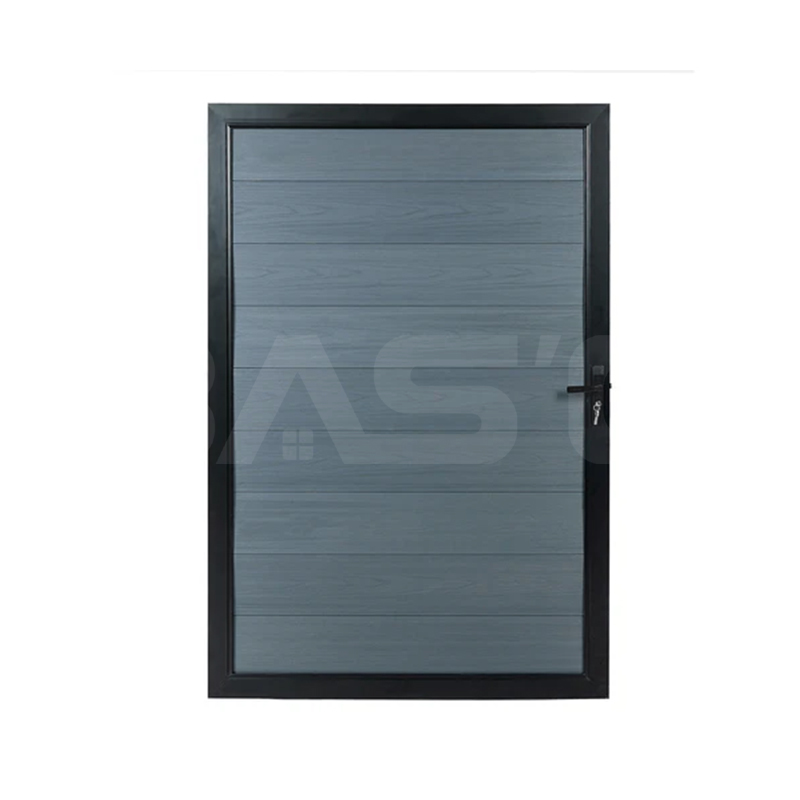
If you want to review typical composite panel formats, posts, and gates we supply, you can browse our Fence Series page to see common configurations and design directions.
Maintenance and Repairs: What You’ll Do Over 10 Years
From a buyer’s perspective, both composite and vinyl are “low maintenance.” From a manufacturer’s perspective, the real difference is how the fence looks after routine life—washing, minor impacts, and seasonal grime.
Routine care
- Composite: periodic washing is usually sufficient; capped/co-extruded surfaces can improve stain resistance and make cleaning easier.
- Vinyl: wash with mild soap and water; darker marks may require more attention, and aggressive scrubbing can change surface gloss.
Repair realities (the part most brochures skip)
When damage occurs, both materials are typically repaired by replacing a component rather than patching it. Vinyl can crack under sharp impact—especially in very cold weather—so buyers in freeze/thaw regions should pay extra attention to reinforcement options and rail design. Composite boards are generally more resistant to everyday knocks, but if a board is severely gouged, replacement is usually the cleanest fix.
The most cost-effective “maintenance strategy” is often design and installation: choose a system with replaceable boards, robust posts, and hardware that stays tight through wind and use.
Cost and Long-Term Value: Budgeting with Practical Numbers
Upfront price matters, but “value” comes from the total combination of material, posts/foundations, installation labor, and the appearance you maintain after years outdoors. In many markets, a realistic planning range for installed fencing looks like this:
- Vinyl: roughly $25–$55 per linear foot installed, depending on reinforcement, height, and layout complexity.
- Composite: roughly $35–$70 per linear foot installed, influenced by board profile, cap layer, post type, and local labor.
A simple way to sanity-check quotes is to multiply your fence length by the planning range and then add allowances for gates, demolition, slopes, and retaining walls. For example, 150 linear feet of privacy fencing often lands around $3,750–$8,250 for vinyl and $5,250–$10,500 for composite, before gates and site complexities are added.
| Decision factor | Composite (WPC) | Vinyl (PVC) |
|---|---|---|
| Best “look” profile | Wood-like texture; modern tones | Clean, uniform finish (often white) |
| Typical upkeep | Wash; occasional spot cleaning | Wash; watch scuffs/chalking |
| Thermal movement sensitivity | Moderate; spacing matters | Higher; reinforcement and allowances matter |
| Impact behavior | More resistant to everyday knocks | Can crack under sharp impact in cold |
| Budget positioning | Higher upfront; strong long-term appearance | Often lower upfront; strong “clean look” value |
If you want a deeper discussion of budgeting and specification trade-offs, you can also reference our composite fencing costs and installation tips article.
Installation Details That Decide Whether the Fence Performs
I can usually predict future problems by looking at the installer’s plan for posts, fasteners, and movement allowances. Material choice matters, but installation discipline matters more.
System strength is mostly posts and connections
Composite and vinyl fences both benefit from robust post design and proper footing depth. In higher-wind areas, reinforcement and post spacing deserve special attention. For privacy fences, the “sail effect” is real—your fence is essentially a long wind barrier—so it’s worth specifying posts and hardware that keep the panel square over time.
Modular design reduces headaches
Many composite systems (including ours) use modular boards that slide into posts, making height adjustment straightforward and simplifying board replacement if needed. This modular approach also helps you maintain consistent spacing and alignment, especially on long runs with minor grade changes.
- Confirm how the design accommodates expansion and contraction (especially for vinyl).
- Ask what reinforcement is used for corners, ends, and gates.
- Validate that posts, footings, and hardware match local wind and soil conditions.
- Check that components are replaceable without dismantling an entire fence run.
If you prefer a composite system with capped surfaces and modular installation, you can review our co-extruded composite fence panels product page for a concrete example of how boards, posts, and finishes come together in a practical system.
Quick Decision Guide: Which One I Recommend for Common Use Cases
If you’re still weighing composite vs vinyl fence options, this is how I typically guide buyers after we review their site conditions and design goals.
Composite is usually the better fit when
- You want a wood-like aesthetic without staining or sealing cycles.
- Your site is wet, coastal, or high-UV and long-term appearance is a priority.
- You want a more rigid privacy fence feel and a modular board system for future replacements.
Vinyl is usually the better fit when
- You want a clean, uniform look and a lightweight system.
- Your budget is highly sensitive upfront and your site conditions are moderate.
- Your installer has proven experience managing thermal movement and reinforcement details.
My bottom line: choose the fence that matches your climate stresses and your tolerance for visible aging. A well-specified system—posts, hardware, spacing, and finish—will outperform a “cheaper” option that is installed without movement allowances or reinforcement.
How We Support Buyers: Specification, Consistency, and Customization
When customers source fencing internationally, the biggest risks are inconsistency between batches, unclear installation details, and systems that don’t match the site. As a manufacturer, we focus on repeatable production, controlled material ratios, and system-based supply—boards, posts, profiles, and gates designed to work together.
If you’re preparing a quote package, I recommend defining the performance requirements first (privacy level, wind exposure, climate stresses, finish expectations), then selecting the system profile that matches those requirements. You can start by reviewing our Fence Series page to see the composite fence types we manufacture and the system approach we supply.
Our News //
Related News
-
Email: [email protected]
Email: [email protected] -
Tel: +86 13732382108
Tel: +86 18705821696 -
 BLDG#1, LONGOUANWU ECO-INDUSTRIALPARK, MIAOXITOWN, WUXINGDISTRICT. HUZHOU. CHINA

Quick Links
Products Center
Copyright © 2025 Huzhou Baosheng New Material Co., Ltd.All Rights Reserved. Composite Decking Manufacturers Composite Cladding Factory
