
 Español
Deep Embossed vs. Standard Surface Decking: Does Texture Matter?
News-Content
What Makes Deep Embossed Decking Different
Not all composite decking surfaces are created equal. Standard surface decking — sometimes called flat-grain or lightly textured decking — uses a basic pressing process that imprints a shallow wood grain pattern onto the board. The result is functional and clean-looking, but the texture lacks depth.
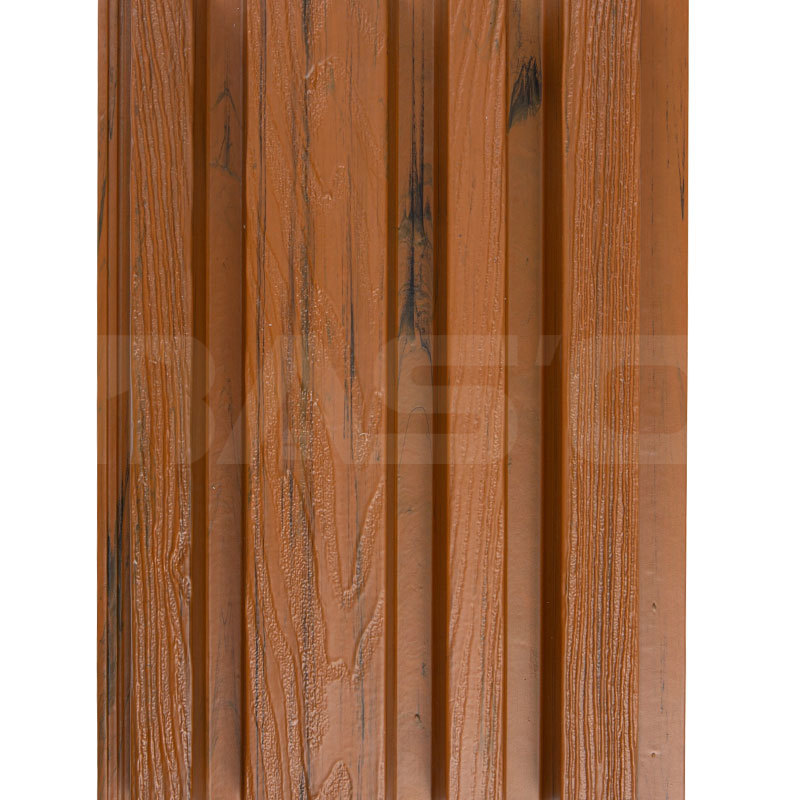
Deep embossed decking takes a different approach. During manufacturing, the board surface is subjected to high-pressure mechanical embossing, pressing grain patterns 2–3mm into the material. Because the texture is formed rather than printed or coated, it becomes a permanent part of the board — it won't fade, peel, or flatten over time. The visual and tactile output is a surface that closely resembles real timber, complete with grain variation, subtle knot references, and a layered feel underfoot.
Visual Realism: How Big Is the Gap?
Side by side, the difference between deep embossed and standard surface decking is immediately visible. Standard boards tend to show repetitive, shallow grain lines — the kind of surface that reads as "composite" from a few feet away. Deep embossed boards, by contrast, create a three-dimensional grain effect that catches light and shadow differently across the plank length, mimicking the natural variation of hardwood.
For residential patios and garden decks where aesthetics matter, this distinction influences how the finished space feels. For high-end commercial projects — hotel terraces, resort pool decks, rooftop bars — the visual realism of deep embossed surfaces contributes directly to perceived quality and project value. Standard surface decking remains a solid choice where budget takes priority and the installation is partially covered or viewed from a distance.
Slip Resistance and Safety
This is where texture has the most measurable practical impact. Deep embossed decking provides significantly better underfoot grip than standard flat surfaces, particularly in wet conditions. The raised grain channels water away from foot contact points and creates friction that a smoother surface simply cannot match.
For poolside installations, waterfront decks, spa terraces, and any surface that will regularly be wet, deep embossed texture is the safer specification. Standard surface decking is adequate for sheltered or low-moisture applications — covered pergolas, indoor-outdoor rooms, or spaces with overhead protection — where wet-surface risk is minimal.
Cleaning and Maintenance: The Honest Trade-Off
Deep embossed boards do have one practical trade-off: the same texture channels that improve grip can also trap fine debris, pollen, and dirt over time. In most cases, periodic rinsing with water and a soft brush is enough to keep the surface clean. But in environments with heavy leaf fall, construction dust, or poolside chemical residue, slightly more attention is required compared to a flat-grain board.
Standard surface decking is marginally easier to clean — a flat surface leaves fewer places for debris to lodge. If low maintenance is the primary project requirement (and slip resistance is not critical), this is worth factoring into the decision. For guidance on how surface type and cap technology interact with temperature and long-term performance, see our article on whether composite decking gets hot in summer.
Which Surface Suits Your Project?
The choice between deep embossed and standard surface decking comes down to three factors: application environment, aesthetic requirements, and maintenance expectations.
| Factor | Deep Embossed | Standard Surface |
|---|---|---|
| Visual realism | High — mimics real timber grain | Moderate — clean but flatter look |
| Slip resistance | Excellent — ideal for wet areas | Adequate for dry/covered spaces |
| Cleaning effort | Slightly higher | Easier on flat surface |
| Best for | Pool decks, hotels, exposed terraces | Covered patios, budget projects |
For commercial and hospitality projects where appearance and safety standards are both non-negotiable, deep embossed is the clear specification. For residential projects where the deck is partially covered and cost control matters, standard surface decking delivers reliable performance at a lower price point.
Both surface types are available across our range of co-extrusion composite decking — which adds a protective polymer cap layer for superior UV, moisture, and stain resistance regardless of surface texture. If you're still weighing the broader material choice, our comparison of Co-Extrusion vs Classic WPC Decking breaks down the performance and cost differences in full.
Does Texture Make a Difference?
Yes — but the right answer depends on what you need it to do. Deep embossed decking delivers better aesthetics and meaningfully improved slip resistance, making it the stronger choice for exposed, high-traffic, or prestige applications. Standard surface decking is a practical, cost-effective option where those factors are less critical.
Understanding the texture is just the start. Get in touch with our team to request samples or discuss the right surface specification for your next project.
Our News //
Related News
-
Email: [email protected]
Email: [email protected] -
Tel: +86 13732382108
Tel: +86 18705821696 -
 BLDG#1, LONGOUANWU ECO-INDUSTRIALPARK, MIAOXITOWN, WUXINGDISTRICT. HUZHOU. CHINA

Quick Links
Products Center
Copyright © 2025 Huzhou Baosheng New Material Co., Ltd.All Rights Reserved. Composite Decking Manufacturers Composite Cladding Factory
