
 Español
Acoustic Wall Panels for Offices and Studios: What Works Best?
News-Content
Why Acoustic Wall Panels Matter in Offices and Studios
Noise is one of the most underestimated productivity killers in modern workspaces. In open-plan offices, background chatter, keyboard clicks, and HVAC hum combine to create a constant acoustic fog that makes focused work significantly harder. Studies in workplace ergonomics consistently show that employees in noisy environments take longer to complete cognitive tasks and report higher stress levels. Meanwhile, in recording studios and podcast rooms, even mild reverberation can compromise audio clarity enough to require costly re-recording sessions.
Acoustic wall panels address these problems directly. Their primary job is not to block sound from entering or leaving a room — that is the role of structural soundproofing. Instead, acoustic panels control how sound behaves inside the room: they absorb reflections, reduce echo, shorten reverberation time, and make speech easier to understand. The result is a space where people can communicate more clearly, concentrate more deeply, and produce cleaner recordings.
Understanding the Key Performance Metrics
Before selecting any panel, it helps to understand the two most important acoustic measurements you will encounter.
Noise Reduction Coefficient (NRC) is the most widely used rating for acoustic panels. It runs from 0 to 1.0, where 0 means the panel reflects all sound and 1.0 means it absorbs all sound. A panel with an NRC of 0.85, for example, absorbs 85% of incident sound energy. For offices, panels with an NRC of 0.70 or higher are generally sufficient. Recording studios and vocal booths typically benefit from panels rated 0.85 to 1.0.
Reverberation Time (RT60) measures how long it takes for sound to decay by 60 dB after a source stops. Longer RT60 values produce echo-heavy rooms that feel noisy and hollow. The ideal ranges vary by use:
- Offices and conference rooms: 0.4 – 0.7 seconds
- Home theaters and broadcast spaces: 0.3 – 0.6 seconds
- Professional recording and vocal studios: 0.2 – 0.4 seconds
One more distinction worth understanding is absorption vs. diffusion. Absorptive panels soak up sound energy, which is ideal for reducing echo. Diffusive panels scatter sound waves evenly around the room, preserving a sense of space without adding harshness. High-performance studios often combine both for a balanced, natural sound environment.
Main Types of Acoustic Wall Panels
The market offers several distinct panel types, each with meaningful differences in performance, appearance, and application.
Fabric-Wrapped Panels
These are the industry standard for commercial spaces. A dense core — typically fiberglass or mineral wool — is wrapped in acoustically transparent fabric that allows sound waves to pass through and be absorbed by the core. They perform well across mid and high frequencies, are available in a wide range of colors and custom sizes, and fit naturally into professional interior designs. NRC ratings typically range from 0.75 to 0.95 depending on core thickness.
Acoustic Foam Panels
Foam panels are the most recognizable option, commonly seen as wedge or pyramid tiles in home studios. They are lightweight, affordable, and effective at absorbing high-frequency sounds such as vocal sibilance and instrument attack. Their weakness is low-frequency performance — they do little to control bass buildup or HVAC rumble. Aesthetically, their appearance may feel out of place in a corporate office setting.
PET Felt Panels
Made from recycled polyethylene terephthalate fibers, PET panels have gained significant traction because they combine good acoustic performance with strong environmental credentials. They are lightweight, available in many colors and geometric shapes, and easy to install. NRC values typically fall between 0.65 and 0.85, making them well suited to offices, coworking spaces, and creative studios where both acoustics and aesthetics matter.
Wood Slat and Composite Acoustic Panels
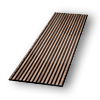
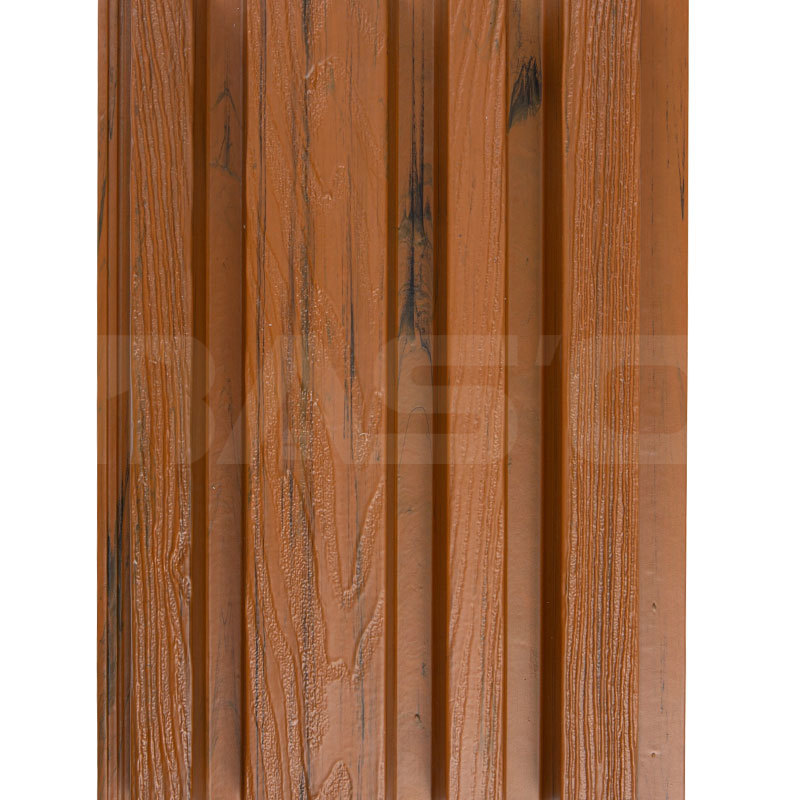
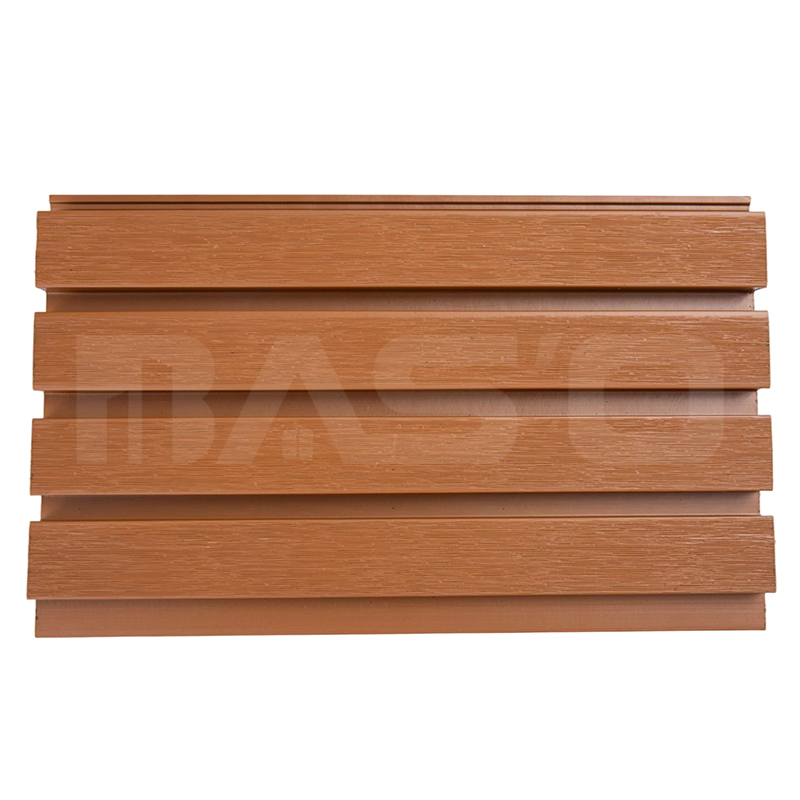
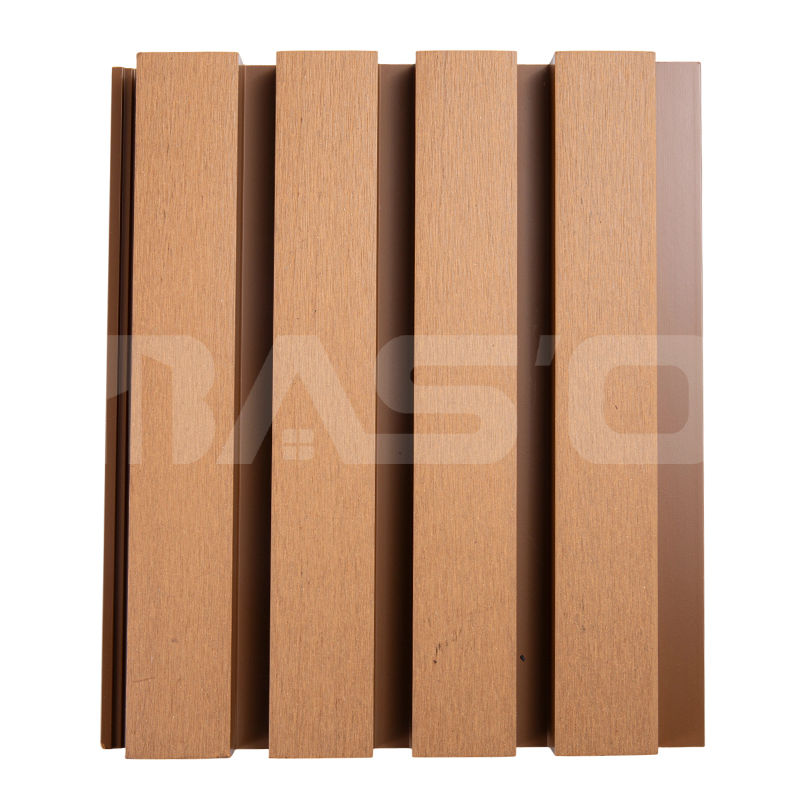
Wood slat panels and engineered composite variants deliver the best combination of visual warmth and functional sound control. The slatted surface creates natural diffusion while the backing material — typically acoustic foam or mineral wool — provides absorption. Acoustic wall panels made from wood-plastic composite (WPC) materials offer an additional advantage: they are moisture-resistant, dimensionally stable, and manufactured partly from recycled content, making them a durable and sustainable choice for both interior offices and studios with humidity variation.
| Panel Type | Typical NRC | Best Frequency Range | Best Use Case |
|---|---|---|---|
| Fabric-Wrapped | 0.75 – 0.95 | Mid / High | Offices, conference rooms, studios |
| Acoustic Foam | 0.60 – 0.85 | High | Home studios, vocal booths |
| PET Felt | 0.65 – 0.85 | Mid / High | Offices, coworking, creative spaces |
| Wood Slat / Composite | 0.70 – 0.90 | Mid (with diffusion) | Executive offices, live rooms, hybrid studios |
Offices vs. Studios: Different Goals, Different Solutions
Offices and studios share a need for acoustic control, but their requirements diverge in important ways.
Office Priorities
The primary goal in a workplace is speech intelligibility and distraction reduction. Employees need to understand colleagues clearly during meetings while avoiding the spillover of nearby conversations. This means targeting the 500 Hz to 4,000 Hz frequency range, where human speech is concentrated. Open-plan offices benefit most from a combination of wall panels and ceiling baffles, since sound travels along multiple paths. Conference rooms and private offices need focused coverage on parallel wall surfaces to eliminate flutter echo between hard faces.
Aesthetics also carry more weight in commercial interiors. Decision-makers increasingly specify panels that serve as intentional design elements — wood slat or fabric-wrapped panels in brand colors are a common choice for boardrooms and reception areas.
Studio Priorities
Recording studios require a more precise acoustic environment. The goal is not simply a quiet room but a controlled and balanced sound field where audio monitoring is accurate and recordings are clean. Studios need to address a wider frequency range, including bass frequencies below 200 Hz that offices can largely ignore. This typically means combining absorptive panels (to control reflections) with diffusive panels (to preserve natural room sound) and bass traps in room corners.
Broadcast and podcast rooms sit somewhere in between: they need high NRC values to eliminate background noise and reverb, but they do not require the bass trapping of a full recording studio. For these spaces, high-coverage PET felt or fabric-wrapped panels covering 40–50% of wall area typically produce excellent results.
How Much Coverage Do You Need?
Coverage percentage is one of the most practical decisions in any acoustic treatment project. More is not always better — an over-treated room can sound unnaturally "dead," which is uncomfortable for occupants and counterproductive for musicians who need to hear room response.
As a general starting point:
- Open-plan offices: 15–25% of wall surface area, supplemented by ceiling baffles above workstations
- Conference and meeting rooms: 25–35%, prioritizing the wall behind the primary speaker position and the side walls
- Podcast and broadcast rooms: 40–50%, distributed evenly to prevent directional bias in recordings
- Recording and mixing studios: 50% or more, with bass traps in all four vertical corners
Placement strategy matters as much as coverage area. Position panels at ear height — approximately 1.0 to 1.8 meters from the floor — where direct sound reflections are most intense. In rooms with a dedicated listening or recording position, treat the first reflection points on the side walls and ceiling. Adding an air gap of 25–75 mm behind panels using a French cleat or Z-clip mounting system meaningfully improves low-to-mid frequency absorption without changing the panel itself. For full installation guidance, review the manufacturer's recommended mounting specifications for each panel type.
Choosing the Right Panel for Your Space
With so many panel options available, narrowing down the choice becomes straightforward once you apply a clear decision framework.
Start with your primary acoustic problem. If you are dealing with echo and reverb in a busy open office, mid-to-high frequency absorption is your priority — PET felt or fabric-wrapped panels are strong candidates. If you are treating a studio where bass buildup is noticeable in corners, thicker composite panels combined with corner bass traps will address the full frequency spectrum more effectively.
Next, consider durability and environment. In spaces with fluctuating humidity — such as recording rooms with extensive electronic equipment or exterior-adjacent offices — panels that are moisture-resistant and dimensionally stable will perform better over time. WPC composite panels are particularly well suited here, as their material composition resists warping and degradation in ways that standard foam or bare fiberglass does not.
Finally, align your choice with the visual language of the space. A corporate headquarters calls for a different aesthetic than a boutique recording studio, and today's panel manufacturers offer enough variety in surface finish, color, and profile to satisfy both. Explore the full range of acoustic panels to find options that match both the performance specification and the design brief for your project.
The best acoustic panel is the one that solves your specific problem, fits your space's design intent, and holds up reliably over time. Treat those three criteria as non-negotiable, and the selection process becomes considerably more straightforward.
Our News //
Related News
-
Email: [email protected]
Email: [email protected] -
Tel: +86 13732382108
Tel: +86 18705821696 -
 BLDG#1, LONGOUANWU ECO-INDUSTRIALPARK, MIAOXITOWN, WUXINGDISTRICT. HUZHOU. CHINA

Quick Links
Products Center
Copyright © 2025 Huzhou Baosheng New Material Co., Ltd.All Rights Reserved. Composite Decking Manufacturers Composite Cladding Factory
