
 Español
Slip Resistant Decking: Materials, Textures, Drainage & Safe Installation Guide
News-Content
- 1 What Actually Determines Grip on a Wet Deck
- 2 How Composite Decking Builds Slip Resistance Into the Board
- 3 Matching the Surface to the Application
- 4 Installation Details That Decide Whether a Deck Is Safe
- 5 Cleaning Habits That Preserve Grip
- 6 Classifications, Testing and What to Ask a Supplier
- 7 Choosing the Right Slip Resistant Decking for Your Project
Slip resistant decking is rarely the first line on a specification sheet, yet it is often the detail that decides whether a terrace, pool surround or rooftop walkway is genuinely usable after rain. Composite boards are not automatically safe when wet: a shallow, glossy grain can be just as treacherous as a varnished timber plank. The encouraging news is that grip can be engineered into a board through surface texture, material density, drainage and the way the boards are fixed down.
This guide looks at what actually creates traction underfoot, which surfaces suit which applications, how installation choices either protect or undermine that grip, and what to ask a supplier before you place an order.
What Actually Determines Grip on a Wet Deck
Slip resistance is not a single property of a board. It is the result of several factors working together, and weakness in any one of them can undo the rest.
- Surface texture depth and pattern. Raised ridges and recessed grain break up the film of water that forms on a wet surface, so the sole of a shoe can still make contact with the material itself.
- Water film and drainage. Boards that hold standing water on the surface stay slippery far longer than boards that shed it into the gaps.
- Biological growth. Algae, mould and mildew thrive in damp, shaded conditions and create a slick layer that no texture can overcome.
- Board stability and fixing method. A board that flexes, rocks or lifts underfoot feels insecure and increases the risk of a stumble at the joints.
- Layout and direction. The way boards run relative to the slope, the size and consistency of the gaps, and the position of steps all influence how water moves across the deck.
- Contaminants. Wet leaves, sand, mud, pollen and winter grit are common causes of falls, even on a well-specified surface.
In practice, this means a serious conversation about slip resistance is as much about maintenance, substructure and detailing as it is about the board profile itself.
How Composite Decking Builds Slip Resistance Into the Board
Composite decking is produced by blending recycled HDPE with natural wood fibre and extruding the mix into a dense, weather-stable profile. Because the texture comes from the mould rather than from an applied coating, it does not wear away the way a varnish, oil or stick-on grit strip eventually does. A deep embossed board presses a pronounced 3D grain into the surface, and that grain does two useful jobs: the raised areas provide edges for grip, while the recessed channels give surface water somewhere to go.
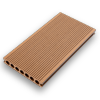
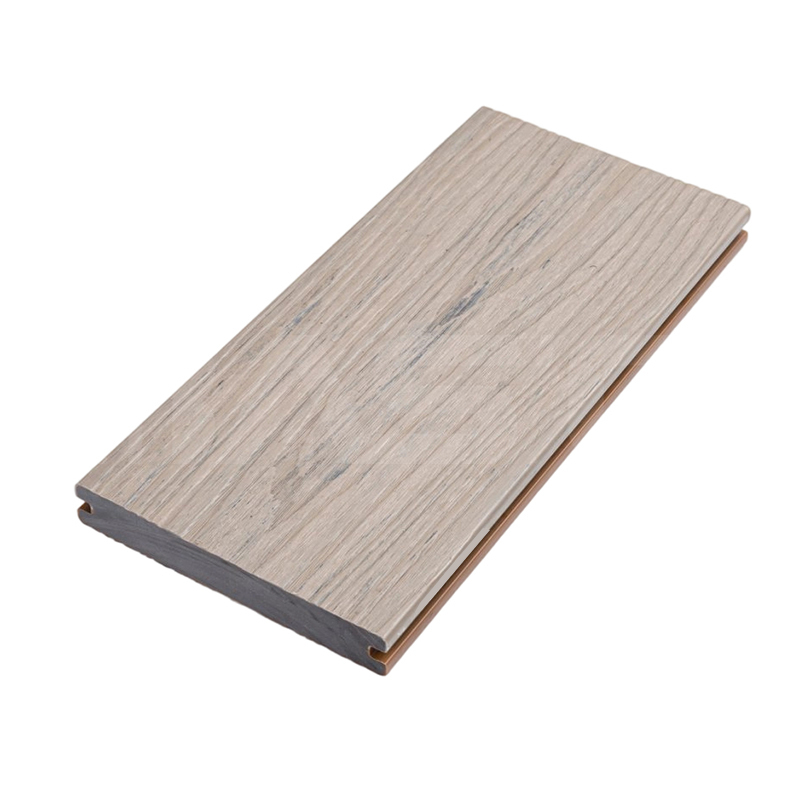
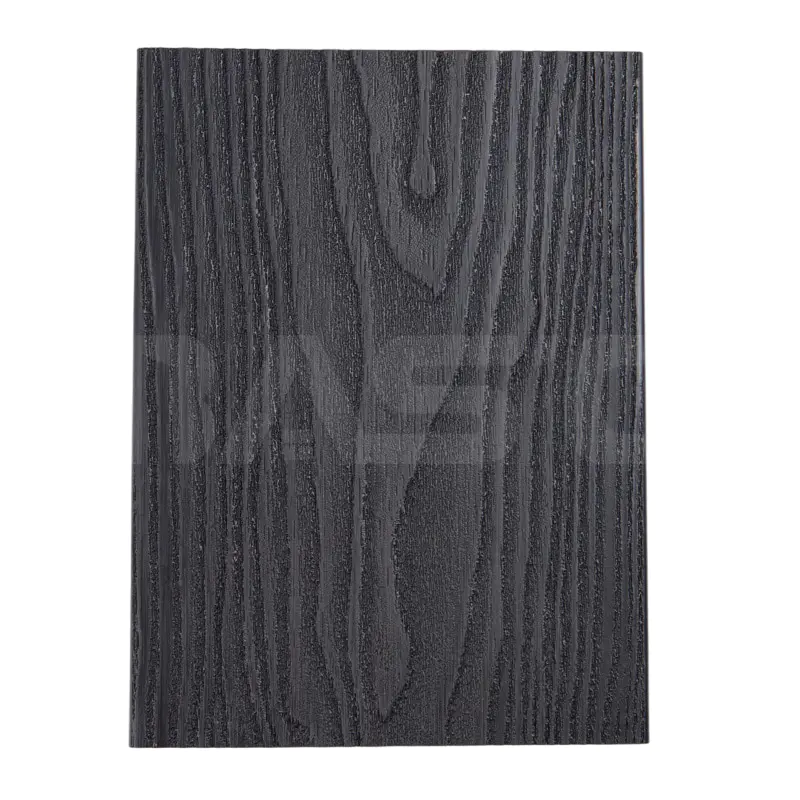 Non-Slip Durable UV Resistant 3D Deep Embossed Composite Decking Board 146mm x 21mm2900mm (L) x 146mm (W) x 21mm (D)View Product →
The depth of that pattern matters. A shallow, standard embossing looks convincing in a showroom but can leave a continuous water film across the surface in heavy rain. A deeper, patterned profile interrupts that film and keeps more of the material in contact with the shoe. It is worth comparing samples wet rather than dry, and looking at how the grain runs along the board rather than only at the face pattern.
Why the Outer Shell Matters Over Time
Co-extruded boards add a protective polymer shell around the core. That shell resists UV fading, slows the build-up of surface contaminants and keeps the embossed pattern crisp through seasons of cleaning and foot traffic. Boards with a stable core and modest flex also feel more secure underfoot, particularly on raised terraces where a springy surface can be unsettling at the edges. Combining a lightweight hollow profile with a proper concealed fixing system gives the best of both: easy handling on site and a firm, quiet deck once installed.
Matching the Surface to the Application
Not every outdoor area carries the same risk. A sheltered porch and a pool surround sit at opposite ends of the scale, and the specification should reflect that difference.
| Application | Main Risk Factor | Surface and Detailing Direction |
|---|---|---|
| Pool surrounds and shower decks | Constant wetness and barefoot traffic | Deep embossed or grooved surface, generous gaps, barefoot-classified products where required |
| Balconies and porches | Driving rain, limited drainage, small footprints | Textured board with a clear fall away from the building and a solid, non-rocking fixing system |
| Steps, ramps and walkways | Slope and concentrated foot traffic | Maximum texture, contrasting edge trim, handrails, and a documented classification for the slope involved |
| Rooftop and podium terraces | Wind-driven rain, no soil drainage | Adjustable pedestals or sleepers to lift boards clear of the roof membrane, with free water flow beneath |
| Shaded or north-facing decks | Algae and mould growth | Co-extruded surface, easy-clean finish and a realistic cleaning schedule built into the maintenance plan |
For wet, high-traffic zones, a co-extruded board with a protective shell and a fine, uniform grain offers a practical balance: reliable traction, easy cleaning and colour that survives years of sun and chlorine splash.
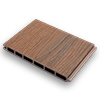
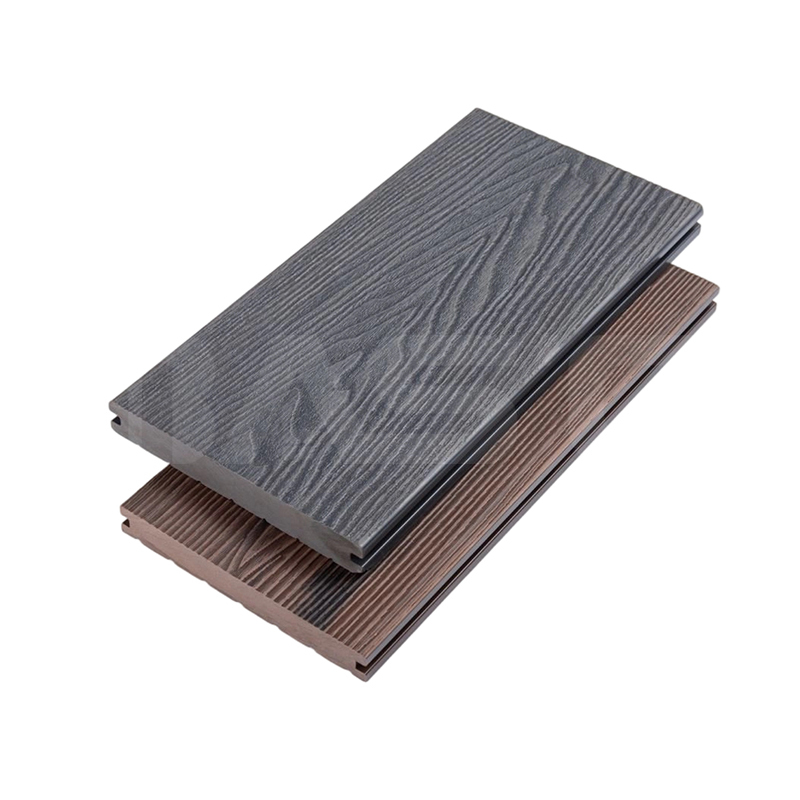
 Anti-Corrosion and Anti-Pest Co-Extrusion Composite Decking Board 140mm x 23mm2900mm (L) x 140mm (W) x 23mm (D)View Product →
Installation Details That Decide Whether a Deck Is Safe
A good board fixed badly is still a hazard. These are the details we see most often on site visits, and the ones worth writing into the installation plan.
- Set a fall away from the building. A gentle slope of roughly one to two percent keeps water moving towards the outer edge instead of pooling against a threshold.
- Keep gaps consistent. Manufacturer-specified gaps let water and debris pass between boards; gaps that close up or open too wide create trip points and blocked drainage.
- Fix every board to every joist. Concealed clip systems hold boards down evenly and stop the lifting and rocking that turns a small step into a stumble.
- Support the structure properly. Correct joist spacing, WPC joists on sleepers where height allows, and adjustable pedestals on hard flat surfaces all reduce flex underfoot.
- Finish the transitions. Edge trim, step nosings, handrails and lighting at changes of level do as much for safety as the deck surface itself.
- Route water away. Downpipes, planters and irrigation lines should never discharge directly onto the decking.
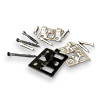
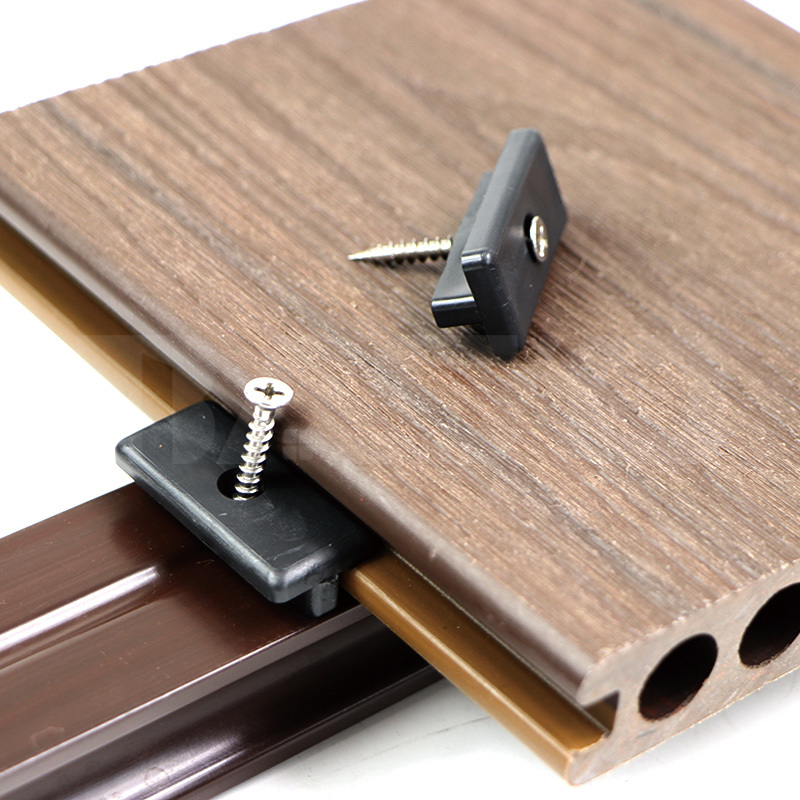 Concealed Clip System PP Plastic Decking ClipsTechnical CharacteristicsView Product →
If you are still weighing up profiles, our comparison of deep embossed versus standard decking surfaces looks at how texture depth affects both appearance and wet-weather performance.
Cleaning Habits That Preserve Grip
Texture buys you time; maintenance keeps it. On composite boards, most loss of grip is caused by a film of algae, dirt or cleaning residue rather than by wear on the surface itself.
- Brush or rinse the deck every few weeks during wet seasons, paying attention to shaded edges and areas under planters.
- Clean biological growth with a soft brush and a mild soap solution; stubborn algae may need a diluted household bleach mix followed by a thorough rinse.
- Avoid waxes, oils and glossy polishes, which leave a slick film on any surface.
- Use a plastic shovel for snow, and avoid metal blades that can scratch the embossed pattern.
- Check and clear the gaps between boards so water continues to drain freely.
Classifications, Testing and What to Ask a Supplier
Several recognised test methods describe how a flooring product behaves when wet. Buyers on commercial or public projects are often asked to demonstrate compliance with one of them, so it helps to know the vocabulary.
| Test Method | Typical Use | What It Measures |
|---|---|---|
| DIN 51130 (R9 to R13) | Shod traffic on ramps and walkways | Angle at which a person slips on an inclined platform with an oiled surface |
| DIN 51097 (A to C) | Barefoot wet areas such as pool surrounds | Barefoot performance on an inclined surface with soapy water |
| ASTM E303 / BS 7976 | General exterior walkways | Pendulum test, reported as a slip resistance value on a wet surface |
| AS 4586 | Australian and New Zealand projects | Classification of products using both pendulum and oil-ramp results |
Ask for test data that matches the surface finish you will actually receive, not a generic certificate. Texture depth, board width and even colour can change results, so the sample tested should reflect the delivered product.
Choosing the Right Slip Resistant Decking for Your Project
A short checklist keeps the decision grounded in the site rather than the brochure.
- Identify the highest-risk area on the project and work backwards from there.
- Confirm whether a formal classification is required, and for which test method.
- Request wet samples and compare texture depth against a standard profile.
- Specify the fixing system, joist spacing and fall as one package.
- Agree a realistic cleaning routine with the end user before handover.
At BASO, we manufacture composite decking, cladding, fencing and accessories for projects in more than 25 countries, drawing on eight years of export experience, more than twenty extrusion lines and a quality system built around ISO and CE practice. Our deep embossed and co-extruded boards are available in several widths and profiles, and our team can advise on moulds, matching clips, joists and edge trim for a complete, safe installation. If you are specifying a wet or high-traffic area, send us the drawings and we will help you match the surface to the risk.
Our News //
Related News
-
Email: [email protected]
Email: [email protected] -
Tel: +86 13732382108
Tel: +86 18705821696 -
 BLDG#1, LONGOUANWU ECO-INDUSTRIALPARK, MIAOXITOWN, WUXINGDISTRICT. HUZHOU. CHINA

Quick Links
Products Center
Copyright © 2025 Huzhou Baosheng New Material Co., Ltd.All Rights Reserved. Composite Decking Manufacturers Composite Cladding Factory
