
 Español
Aluminium Porch Railing Guide: Materials, Sizes, Costs, and Installation
News-Content
- 1 Why Aluminium Porch Railing Has Become the Go-To Choice
- 2 What Makes Up a Complete Aluminium Porch Railing System
- 3 Powder Coating, Colour, and Finish Performance
- 4 Heights, Spacing, and Code Basics
- 5 Aluminium vs. Composite and Wood: Which Porch Railing Fits the Project
- 6 Installation Practices That Keep Aluminium Railings Straight
- 7 What Drives the Price of Aluminium Porch Railing
- 8 Care, Warranty, and Long-Term Value
- 9 Ordering Aluminium Porch Railing From a Manufacturer
Walk through any new-build neighbourhood or coastal rental row and you will notice the same detail on nearly every front porch: slim, even lines of aluminium porch railing that never seem to peel, sag, or need repainting. That is not a coincidence. Aluminium has moved from a niche alternative to a mainstream choice for porch guards and handrails, and once you understand how the profiles are made, how they are coated, and what they cost, the reasons become obvious.
This guide covers the practical side of specifying aluminium porch railing: the parts that make up a complete system, coating options, the code measurements that matter, installation details that keep rails straight, and the cost factors that move a quote up or down. It is written from the perspective of a manufacturer that extrudes and finishes outdoor building profiles every day, and that also supplies composite alternatives when a project calls for a warmer, wood-look finish.
Why Aluminium Porch Railing Has Become the Go-To Choice
Porch railings live in a punishing environment. They take direct sun on the face, driving rain in the joints, salt in coastal air, and constant hand contact along the top rail. Wood needs repainting every few years to survive that. Steel needs galvanising or a flawless coating to stop rust bleeding at the welds. Aluminium sidesteps both problems. Extruded 6000-series alloy, with 6063-T5 as the workhorse grade for railing profiles, forms its own protective oxide layer, so it will not rust even where the powder coating is scratched through.
Weight matters just as much. Aluminium weighs roughly a third of steel for the same section, which means one installer can carry a full rail section up a stair and set it without help. That lightness also reduces the load transferred into porch posts and rim joists, a real advantage on older porches where the framing is no longer as stiff as it once was.
Finally, aluminium is easy to machine and coat. It can be extruded into decorative balusters, hidden fastener channels, and integrated top-rail grooves, then powder coated in nearly any colour a homeowner or designer asks for. Durability, low weight, and design freedom together explain why aluminium porch railing now appears on everything from single-family front porches to hotel walkways and rooftop terraces.
What Makes Up a Complete Aluminium Porch Railing System
Specifying a railing is far easier when you break it into four families of parts: posts, rails and balusters, connectors, and finish accessories. Good systems are designed as a complete kit, and mixing brands usually costs more time on site than it saves in material.
Posts and Post Mounts
Posts are the structural spine of the railing. Common sizes are 50 mm x 50 mm and 76 mm x 76 mm, with wall thickness between 1.6 mm and 3 mm depending on span and wind load. Base plates, flange covers, and surface-mount or fascia-mount brackets determine how the post meets the porch structure, and that choice is usually made before anything is ordered.
Rails, Balusters, and Panels
Top rails are typically 40 mm to 65 mm wide so they sit comfortably in the hand, while bottom rails carry pre-punched holes or channels for the balusters. Balusters come square, round, or twisted, and the spacing between them is the single most inspected dimension on any porch railing. Some systems replace individual balusters with pre-assembled panels, which speeds up installation considerably on long runs.
Connectors, Brackets, and Covers
Bracket systems, stainless self-drilling screws, and colour-matched snap covers hide fasteners and allow the railing to expand and contract without loosening. Small parts like these are where cheap systems reveal themselves first, so it is worth checking the grade of stainless steel specified for coastal jobs.
 Aluminium Fences Manufacturersinformation to be updatedView Product →
Powder Coating, Colour, and Finish Performance
The coating is what a customer actually sees and touches, so it deserves more attention than the alloy itself. Standard architectural polyester powder, applied over a properly pre-treated surface, is more than adequate for inland residential porches. Pre-treatment normally means a chromate-free conversion coating or an etch-and-primer sequence, followed by a cure that produces a dry film thickness of roughly 60 to 80 microns.
For coastal, industrial, or high-UV markets, look for coatings tested to recognised weathering standards rather than marketing adjectives. A higher-grade finish holds colour and gloss noticeably longer in salt spray and strong sunlight. Surface texture is a design decision as well: matte and satin finishes hide minor scuffs better than high gloss, and sublimated wood-grain finishes give a natural look without the maintenance of timber. Always order a touch-up pen in the same batch colour, because fading and batch variation make later matching difficult.
Heights, Spacing, and Code Basics
Porch railing dimensions are regulated, and getting them wrong is expensive to fix after posts are set. Residential guards are commonly 36 inches (about 914 mm) above the porch surface, while commercial and multi-family projects often require 42 inches (about 1067 mm). Stair rails are measured vertically from the nosing of the tread, generally landing between 34 and 38 inches.
The other rule that governs layout is the four-inch sphere test: openings in a guard must not allow a four-inch sphere to pass through. That single requirement sets maximum baluster spacing, and it is the reason most aluminium systems pre-punch their bottom rails at a fixed pitch. If you are planning a custom layout, work out the spacing before cutting anything.
- Guard height: 36 inches residential, 42 inches commercial, unless local code says otherwise.
- Baluster gaps: no opening larger than four inches in most residential codes.
- Post spacing: frequently 1.8 m, but always follow the manufacturer's span table for the profile.
- Handrail grip: typically 32 mm to 50 mm in diameter for a comfortable, code-compliant grasp.
If you would rather not calculate the pitch by hand, the baluster spacing calculator and four-inch rule guide walks through the maths for different materials and rail lengths.
Aluminium vs. Composite and Wood: Which Porch Railing Fits the Project
Aluminium is not automatically the right answer for every porch. Composite and wood railings have their own strengths, and the choice usually comes down to budget, climate, and how much future maintenance the owner is willing to accept.
| Material | Typical installed cost per linear foot | Maintenance cycle | Best suited to |
|---|---|---|---|
| Powder-coated aluminium | $55 - $110 | Rinse and inspect annually | Coastal sites, long spans, minimal upkeep |
| WPC / composite | $45 - $95 | Wash twice a year | Wood-look porches that match composite decking |
| Pressure-treated wood | $30 - $60 | Repaint every 2 - 3 years | Tight budgets and DIY builds |
| Vinyl / PVC | $40 - $85 | Wash once a year | Inland homes wanting a bright, uniform look |
In practice, aluminium wins on coastal porches, elevated decks, and any project where the owner wants a decade of low effort. Composite railings win when the porch floor is already composite and the owner wants a consistent timber appearance. Wood remains the cheapest first cost but the most expensive over ten years once labour and coatings are counted.
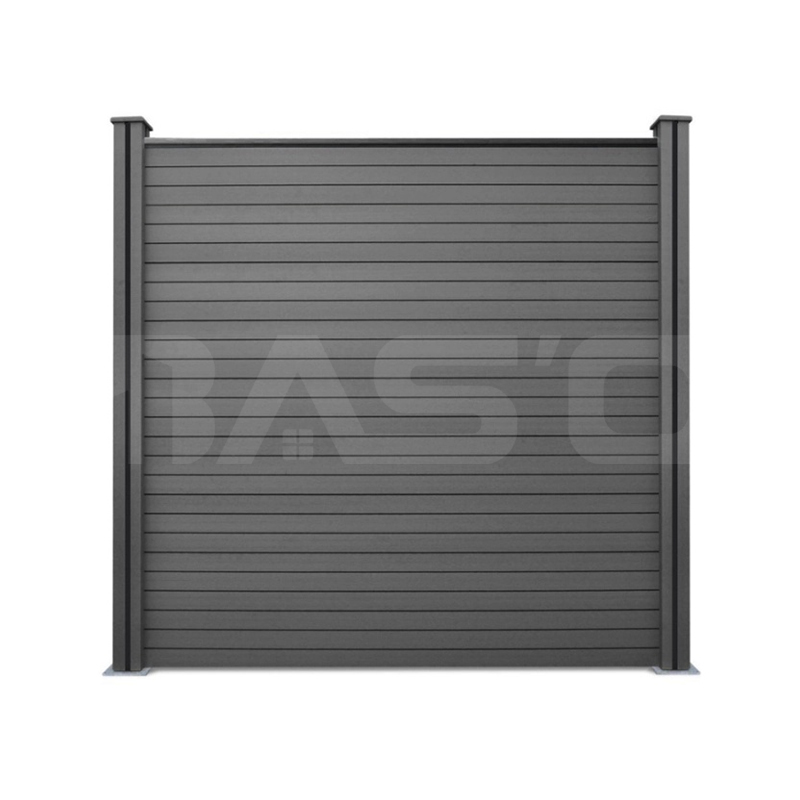 WPC Fence SuppliersWPC Fence Post and Panel KitView Product →
Installation Practices That Keep Aluminium Railings Straight
Most complaints about aluminium railing trace back to installation rather than the product. The profiles are dimensionally stable and light, but they will follow a bad layout, and they need room to move.
- Verify the layout and blocking before setting a single post. Railing should fasten to structure, not only to deck boards.
- Set posts plumb in both directions and check them again after tightening the base brackets.
- Cut rails with a fine-tooth carbide blade and deburr every cut end to protect the coating.
- Leave small expansion gaps at butt joints and use the sleeves or connectors supplied with the system.
- Fasten balusters to the specified torque. Over-tightening distorts bottom rails and cracks coatings.
- Fit post caps and snap covers last, then touch up any scratches before handover.
Two people can usually complete a standard porch in a day, but allow extra time for stairs, corners, and any section that has to be scribed to an uneven fascia.
What Drives the Price of Aluminium Porch Railing
Alloy and powder prices set the floor, but several other factors shape a real quote. Profile complexity matters: a simple square baluster extrudes quickly, while a sculpted or wood-grain profile costs more per metre. Wall thickness affects both strength and material consumption. Coating grade, colour, and whether a special batch is required all add cost, and baluster count changes the number of holes, screws, and clips in the box.
Logistics deserves a mention too. Railing rails are long, light, and awkward to ship, so freight and packaging can be a meaningful share of landed cost on export orders. Buying in project quantities rather than piece by piece usually improves the rate, and ordering matching accessories in the same shipment avoids a second freight charge for a small box of clips.
Care, Warranty, and Long-Term Value
Aluminium railing is genuinely low maintenance, but low is not the same as none. A short annual routine keeps a porch looking new for many years.
- Rinse with fresh water and a mild detergent, especially within a few kilometres of the coast.
- Avoid abrasive pads and chlorinated or strongly alkaline cleaners, which dull the coating.
- Check fasteners and bracket screws once a year and re-tighten if needed.
- Touch up scratches promptly with colour-matched paint to prevent moisture tracking under the film.
- Keep warranty documents and the original colour reference on file for the owner.
Ordering Aluminium Porch Railing From a Manufacturer
For distributors, contractors, and project buyers, the most useful conversation happens before the drawings are final. A manufacturer can advise on wall thickness for a given span, adjust baluster pitch for local code, match a colour to a building facade, and supply coordinating posts, caps, and brackets in one delivery. Custom dies are also worth discussing when a market needs a profile that is not yet available off the shelf.
At BASO, that is the way we prefer to work. We extrude and finish outdoor profiles on more than twenty production lines, operate to ISO and CE quality standards, and have supplied composite decking, cladding, fencing, and accessory systems to customers in more than twenty-five countries over eight years of export. If aluminium is not the right fit for a particular porch, we will say so and point you toward a composite option instead. You can see the full range on our outdoor building products page or send drawings for a quotation.
Aluminium porch railing earns its popularity the honest way: it does not rust, it does not need repainting, it installs quickly, and it holds its appearance through years of sun, rain, and salt air. Get the profile, coating, and spacing right at specification stage, install it with a little room to move, and the railing will quietly outlast almost everything else on the porch.
Our News //
Related News
-
Email: [email protected]
Email: [email protected] -
Tel: +86 13732382108
Tel: +86 18705821696 -
 BLDG#1, LONGOUANWU ECO-INDUSTRIALPARK, MIAOXITOWN, WUXINGDISTRICT. HUZHOU. CHINA

Quick Links
Products Center
Copyright © 2025 Huzhou Baosheng New Material Co., Ltd.All Rights Reserved. Composite Decking Manufacturers Composite Cladding Factory
