
 Español
Deck Colors That Age Beautifully: How to Choose Colores de Deck for Your Home
News-Content
- 1 Why Deck Color Matters More Than the Photos Suggest
- 2 The Main Color Families Worth Comparing
- 3 What Each Color Family Does Well
- 4 Match the Deck to the House, Not to the Sample Rack
- 5 Sun, Heat and the Way Composite Color Ages
- 6 Texture Changes the Color You Actually See
- 7 Carrying the Palette Across Deck, Fence and Cladding
- 8 How to Test a Color Before You Order
- 9 Questions We Hear About Deck Colors
Ask ten homeowners what color their deck should be and you will almost certainly get ten different answers. That is exactly why "colores de deck" is one of the questions we hear most often from customers in Spain, Mexico, Chile and the southern United States. After eight years of exporting composite decking, cladding and fencing to more than 25 countries, we have stopped treating deck color as a question of fashion. It is really a question of light, weather, architecture and how much maintenance someone is willing to live with.
Why Deck Color Matters More Than the Photos Suggest
A deck takes up a large share of what people see from the kitchen window, the garden and the street. Color decides whether that surface reads as warm or cool, calm or busy, and it also decides how quickly footprints, pollen and dust become visible after cleaning. Pale boards reflect light and shrug off dust; dark boards absorb heat and show every scuff and water mark.
There is a comfort factor too. On a south-facing terrace in midsummer, a near-black board can be genuinely unpleasant underfoot at two in the afternoon, while a sand or pale grey board stays walkable. None of this makes one color better than another, but it does mean the right answer depends on where the deck sits and how it will be used.
The Main Color Families Worth Comparing
Most decking ranges, including ours, are built around five broad families. Comparing them side by side is faster than scrolling through hundreds of finished projects.
| Color family | Typical shades | Pairs well with | What to watch |
|---|---|---|---|
| Warm browns and wood tones | Teak, walnut, chestnut, honey, red-brown | Brick, natural stone, timber-clad houses, mature gardens | Strong red-based browns can fight with orange brick |
| Greys and greige | Silver-grey, mid-grey, warm greige, taupe | White or grey render, glass balustrades, coastal homes | Cool greys can look flat in deep shade |
| Charcoal and espresso | Near-black, dark slate, deep brown-black | Large glazed facades, minimalist architecture, light paving | Higher surface heat in full sun; dust shows clearly |
| Cream, sand and pale grey | Ivory, limestone, pale oak, soft beige | Dark timber, red brick, lush tropical planting | Leaf tannin and dirt are more visible |
| Two-tone and streaked boards | Variegated woodgrain, double-sided boards with two faces | Mixed-material facades, decks that meet paving | Heavy streaking can look busy across a large area |
What Each Color Family Does Well
Warm browns and natural wood tones
These remain the safest choice for traditional houses, brick facades and gardens with mature planting, because they echo the timber and stone already present. A well-made woodgrain board carries the warmth without the annual sanding and oiling that real timber demands. Our solid co-extrusion boards in the 140 mm range are produced in these tones with a capped surface that holds pigment rather than letting it erode.
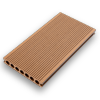
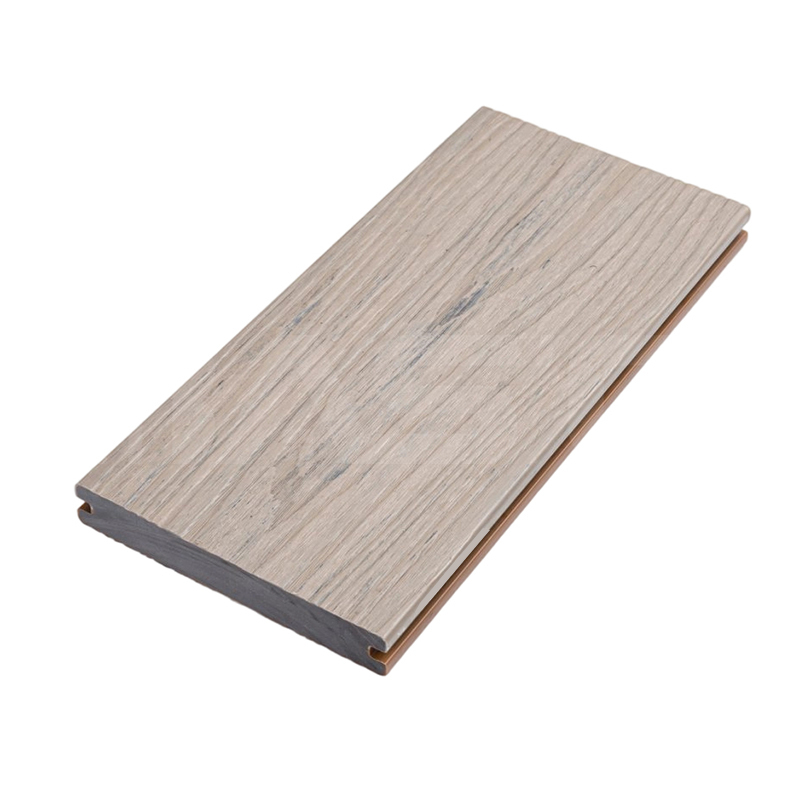
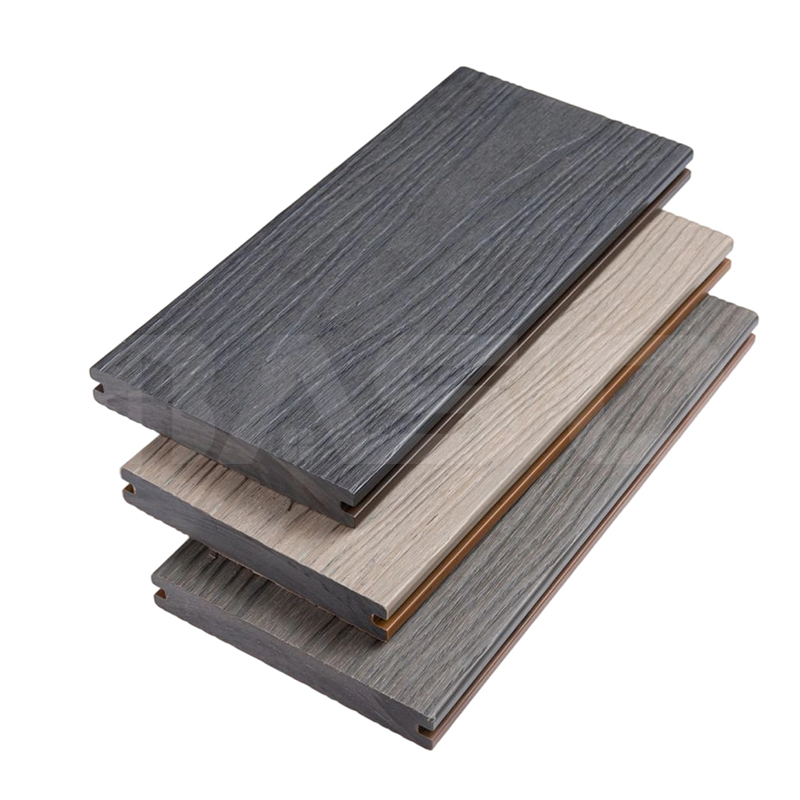 Co-Extrusion Composite Decking Solid Board 140mmCapped co-extrusion decking in 140mm boards, with embossed woodgrain and grey tones suited to both traditional settings and contemporary courtyards.View Product →
Greys and greige
Grey is the color that made composite decking popular, and it still suits contemporary architecture best. Greige — grey with a warm undertone — solves the common complaint that cool greys look cold or slightly blue in northern light. In shaded courtyards, choose the warmer end of the range.
Charcoal and espresso
Dark boards create a strong, tailored line and make planting look greener by contrast. They work beautifully against pale render or glass. Be honest about the trade-offs: more heat underfoot, more visible dust, and a stronger need for a texture that hides small marks.
Cream, sand and pale grey
Light boards keep a small terrace bright and reflect heat rather than storing it. They suit darker houses and tropical gardens. Expect to sweep a little more often, and avoid them directly beneath trees that drop tannin-rich leaves.
Match the Deck to the House, Not to the Sample Rack
Samples viewed indoors under artificial light are unreliable. Before committing, work through the building itself:
- Identify the undertone of the facade — warm brick and cream render behave very differently from cool grey render.
- Look at the roof. A dark roof above a dark deck can make a garden feel closed in.
- Check window frames and trim. Matching or deliberately contrasting with them is usually better than ignoring them.
- Note how much shade the site receives. Shaded decks read two shades darker than the same board in sun.
- Consider the paving and boundary walls, which stay visible around the deck all year.
Sun, Heat and the Way Composite Color Ages
Color stability is where material quality shows. WPC boards combine recycled HDPE with natural wood fiber — our classic solid range, for example, uses around 30% recycled HDPE and 60% natural wood fiber — and the polymer fraction is what carries the pigment and resists moisture. Co-extruded boards add a protective cap layer over that core, and it is this cap that takes the UV load and keeps the surface color even rather than letting it chalk or grey unevenly.
Fading is a real phenomenon with any outdoor material, but the difference between a board that shifts slightly over a decade and one that patches within two summers usually comes down to pigment quality and UV stabilization. Buyers who care about long-term appearance should ask specifically about the cap layer and the recycled content, and can read more about how we handle recycled materials and outdoor durability.
Texture Changes the Color You Actually See
A deep, brushed woodgrain catches light and shadow, so the same nominal color looks richer and hides scratches and dust far better than a flat surface. Smooth boards look more uniform and modern but show every mark. If you are choosing a dark color, texture is not a detail — it is what keeps the deck looking clean.
We compared the two approaches in more depth in our guide to deep embossed versus standard decking surfaces, which is worth reading before you settle on a finish. A 3D embossed board with a non-slip, UV-resistant surface is a sensible compromise for pool surrounds and family gardens where both grip and appearance matter.
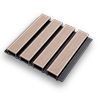
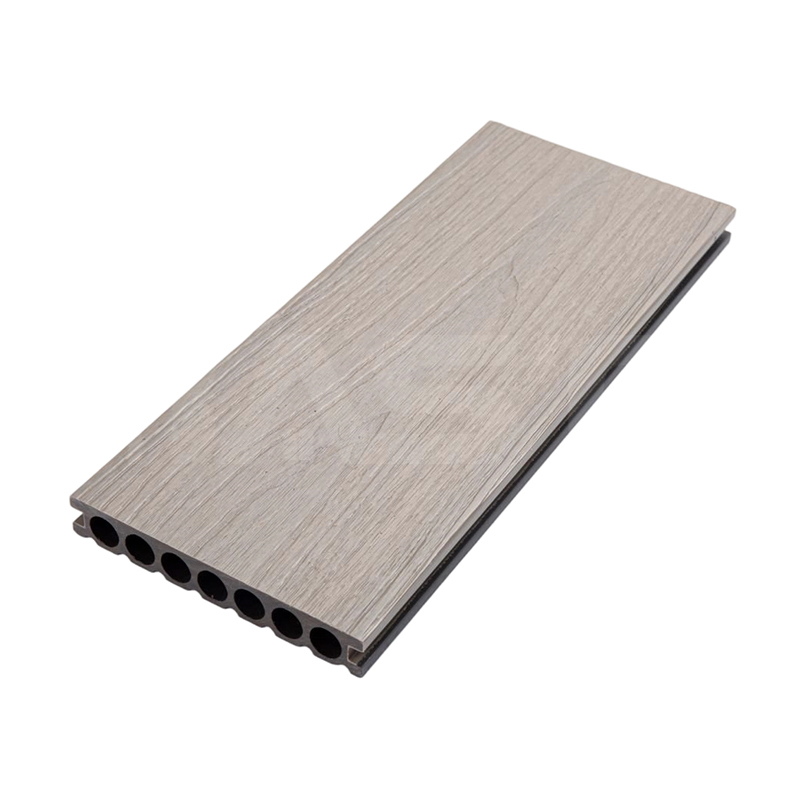
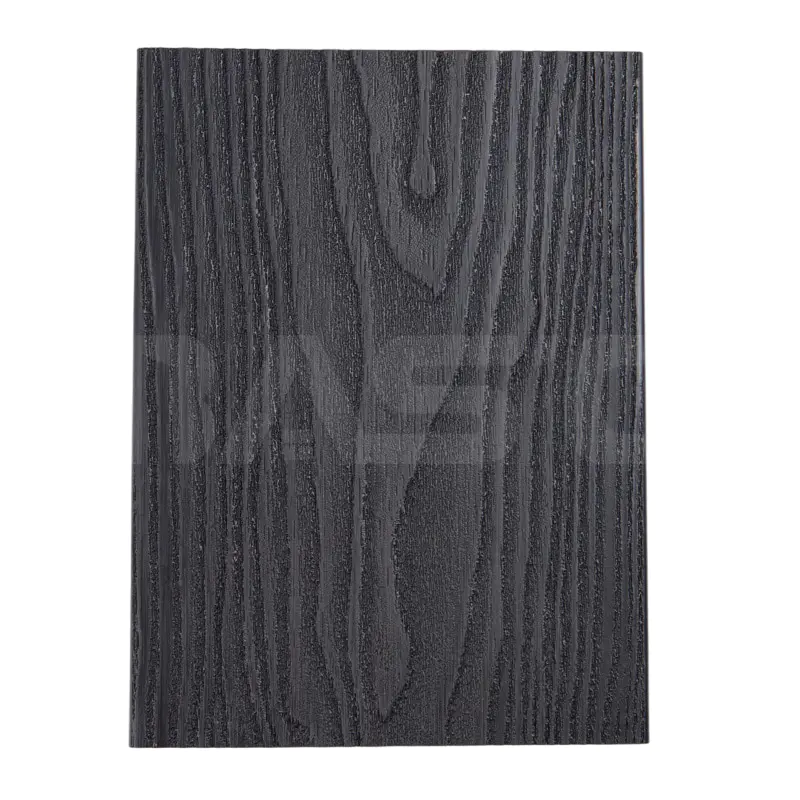 3D Deep Embossed Non-Slip Composite Decking BoardDeep-embossed, UV-resistant decking with a non-slip surface, a practical choice for pool surrounds and family gardens where grip and appearance matter.View Product →
Carrying the Palette Across Deck, Fence and Cladding
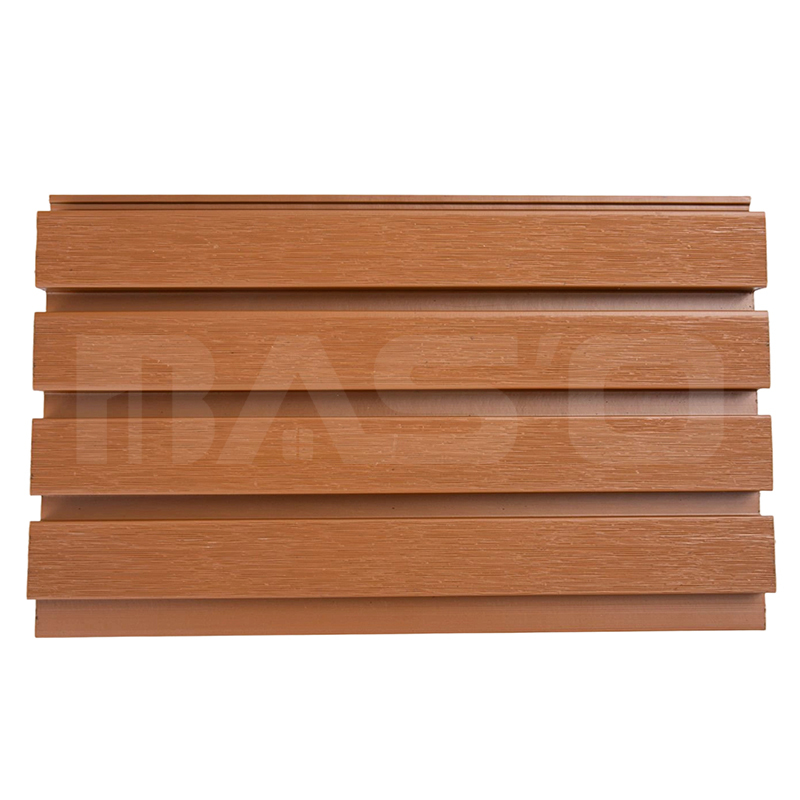
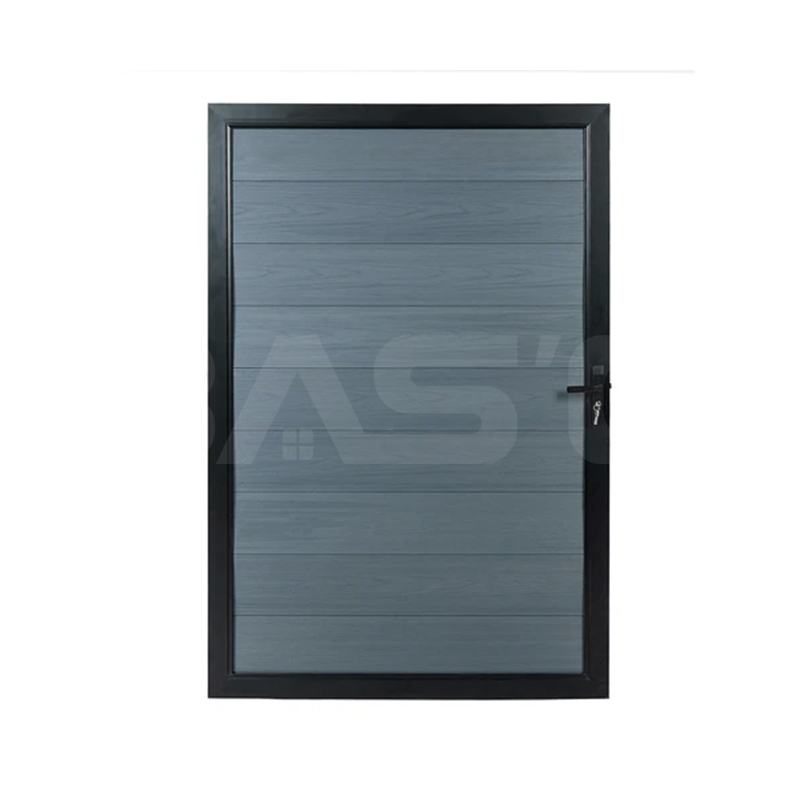
Color decisions rarely stop at the floor. Where a deck meets a boundary fence or a clad wall, the eye reads them as one composition. Choosing boards from the same family — a warm brown deck with a slightly darker brown fence, or a grey deck with a charcoal screen — creates coherence without looking matched. Classic solid boards with UV-resistant, fade-resistant pigments are a dependable base for this kind of multi-surface scheme, because the color you approve on the sample is the color that arrives in the container.
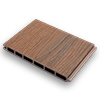
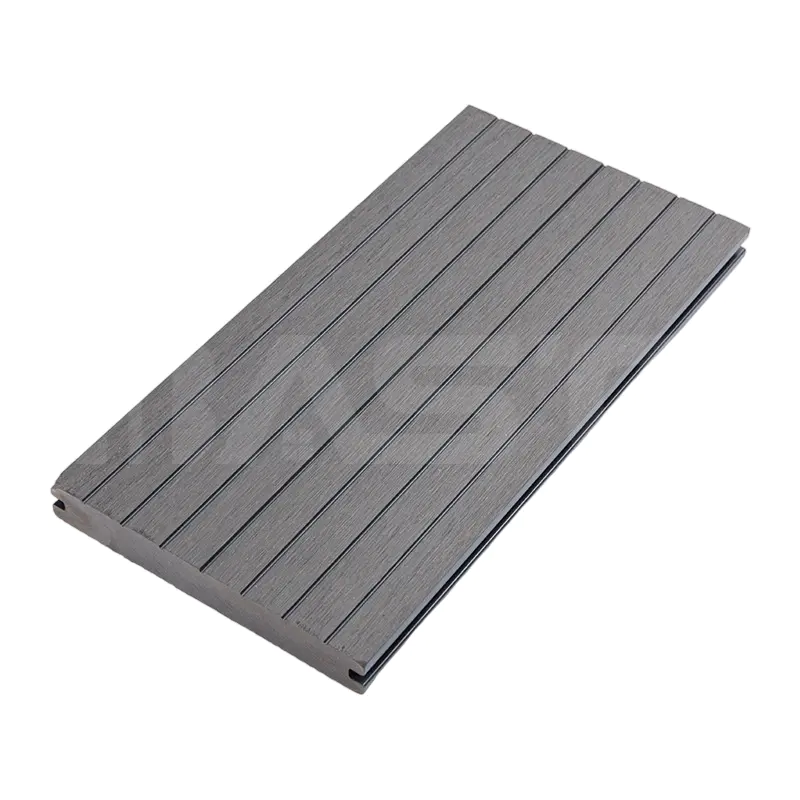 UV-Resistant Classic Solid Composite Decking Board 150mmFade-resistant solid composite boards in a coordinated color family, useful for deck, cladding and fencing schemes ordered from one manufacturer.View Product →
Where a project spans decking, wall cladding and fencing, ordering everything through one manufacturer also reduces the risk of two batches arriving with a visible tonal difference.
How to Test a Color Before You Order
- Request physical samples of two or three candidates rather than relying on screen images.
- Lay them on the actual site, in the actual orientation, and leave them there for a week.
- View them at the times of day you use the space — morning, midday and evening light change everything.
- Wet the samples. Most boards darken noticeably when wet, and that is the color you will see after rain.
- Compare them beside the facade, paving and fence, not in the middle of the lawn.
Questions We Hear About Deck Colors
Does a dark composite deck really get too hot?
It gets warmer than a pale board, yes. In hot climates, choose a mid-tone or a textured light-to-mid shade for areas used barefoot, and keep near-black for shaded terraces or decorative borders.
Will the color fade over time?
All outdoor materials shift slightly. Good co-extruded boards with UV-stabilized cap layers hold their tone far longer than uncapped or low-grade products, and lighter and mid-tone boards generally show change less than very dark ones.
Can I mix two colors on one deck?
Yes, and a contrasting border or picture-frame edge is a classic way to do it. Keep the second color to a border or an inlay so the pattern stays deliberate rather than busy.
Do lighter colors really stay cleaner?
They hide dust and pollen better than dark boards but show leaf tannin and mud more. Textured surfaces help either way.
Choosing colores de deck is ultimately a process of elimination rather than inspiration. Rule out the families that fight with your facade, rule out the shades that will be uncomfortable underfoot where you actually walk, then test what remains on site for a week. What is left is usually a short, confident list — and a deck you will still be happy with ten summers from now.
Our News //
Related News


-
Email: [email protected]
Email: [email protected] -
Tel: +86 13732382108
Tel: +86 18705821696 -
 BLDG#1, LONGOUANWU ECO-INDUSTRIALPARK, MIAOXITOWN, WUXINGDISTRICT. HUZHOU. CHINA

Quick Links
Products Center
Copyright © 2025 Huzhou Baosheng New Material Co., Ltd.All Rights Reserved. Composite Decking Manufacturers Composite Cladding Factory
