
 Español
Composite Decking Comparison Chart: How to Compare Boards, Specs and Costs
News-Content
- 1 What Belongs in a Composite Decking Comparison Chart
- 2 Composite Decking Comparison Chart: Four Board Types Side by Side
- 3 Composite Compared With Wood, PVC and Aluminium
- 4 Specs That Quietly Decide How the Deck Feels
- 5 Matching the Board to the Project
- 6 The Hidden Half of the Chart: Joists, Clips and Trim
- 7 Building Your Own Comparison Chart in an Afternoon
Most pages that promise a composite decking comparison chart do the same thing: they line up a handful of brands and rank them. That helps once you have already shortlisted a supplier. It helps far less when the real question is whether a hollow board, a solid board, a deep-embossed plank or a capped co-extrusion profile actually suits the deck you are about to build.
We manufacture these boards, so treat us as biased. Still, after eight years of shipping decking, cladding and fencing to more than 25 countries, one pattern is hard to ignore: the projects that go smoothly are the ones where the buyer compared structure and specification first and brand names last. Here is the chart we would build with you over a coffee.
What Belongs in a Composite Decking Comparison Chart
A comparison chart is only as honest as its columns. Price per square metre is the column everyone fills in first and the one that misleads most, because it ignores how the board is fixed, how many joists it needs and how long the surface will hold its colour.
Before you compare anything, make sure your working chart has room for these:
- Board construction – hollow, solid, square-hole or capped, because construction drives weight, flex and cost.
- Actual dimensions – width and thickness in millimetres, plus the face width you lose at joints and edges.
- Recycled content and fibre share – our solid boards, for example, run on 30% recycled HDPE and 60% natural wood fibre.
- Surface texture – brushed, woodgrain or 3D deep embossed, and whether the pattern sits on one face or two.
- Fixing method – hidden clips, starter clips, screws, or a proprietary system that locks you into a single supplier.
- Joist spacing and substructure – a large share of the deck's real cost sits underneath the boards.
- Colour retention and warranty terms – read the exclusions, not just the year count.
Composite Decking Comparison Chart: Four Board Types Side by Side
The quickest way to make the chart useful is to group boards by how they are built rather than who sells them. Nearly every composite plank on the market falls into one of four families.
| Board type | Typical size | Structure | Standout strength | Worth knowing |
|---|---|---|---|---|
| Classic hollow | 140 mm face | Hollow core, clip groove | Light to ship, cool underfoot, budget friendly | Can flex; respect the joist spacing |
| Classic solid | 140 mm × 23 mm | Solid board, recycled HDPE and wood fibre | Solid feel, resists insects, warping and edge chipping | Heavier; wants a firm, level frame |
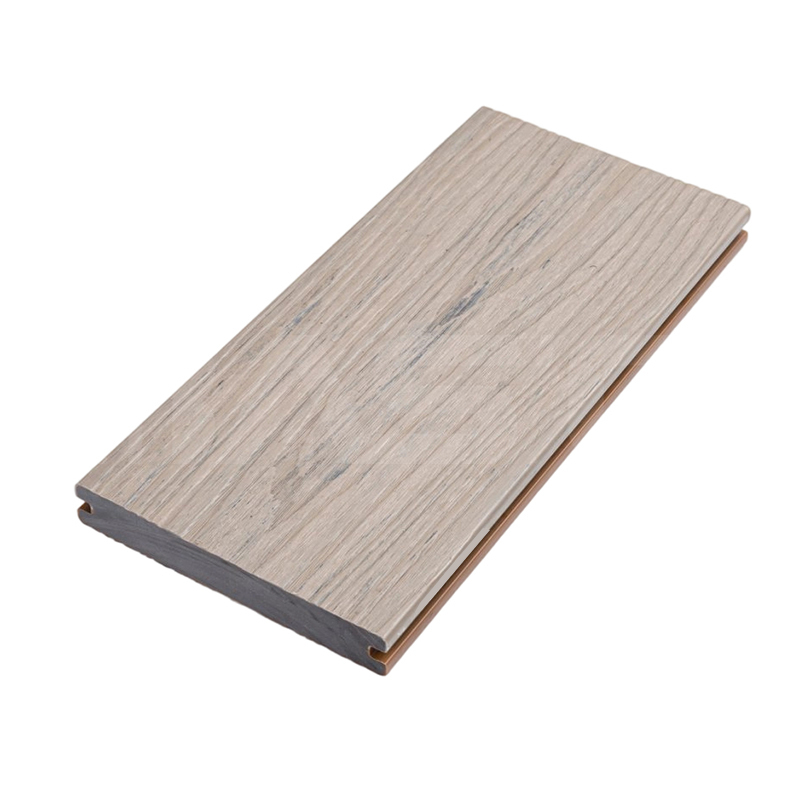
| Deep embossed | 140 × 23 mm, 150 × 20 mm | Solid or square-hole, 3D grain | Grip underfoot and a convincing timber look | Deeper grain holds a little more dirt |
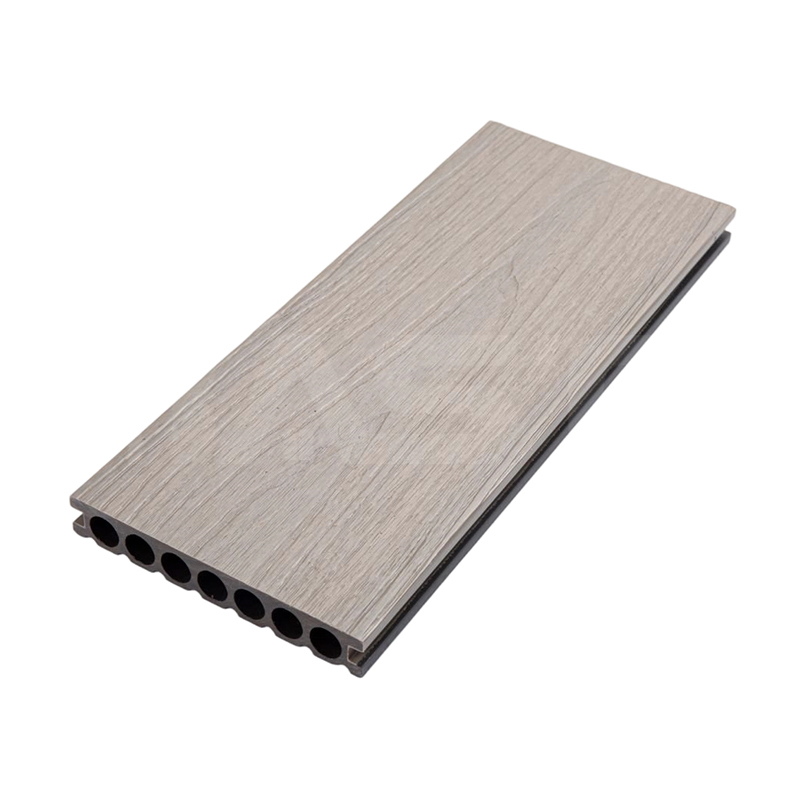
| Co-extrusion | 138 × 23 mm bullnose, 140 × 23 mm, 148 × 23 mm half-cap | Core wrapped in a protective cap layer | Best colour retention and stain resistance | Top of the price range |
Two families deserve a longer look. Classic WPC is the value workhorse: uncapped, texture-pressed and very hard to beat on price per square metre. Co-extrusion adds a bonded outer layer that carries the pigment and takes the wear, which is why it holds its colour in strong sun. If you are torn between the two, we have written a longer walkthrough of co-extrusion versus classic WPC decking that covers where the price gap stops being worth it.
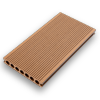
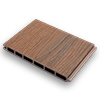
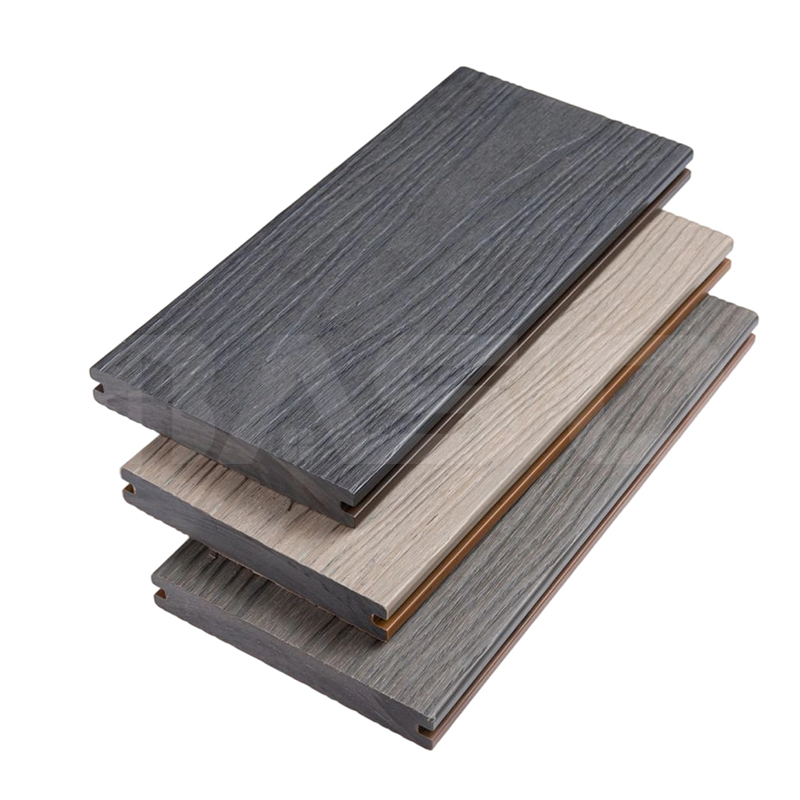 Co-Extrusion Composite Decking Solid Board 140mmA capped WPC board with embossed wood grain, UV protection and hidden-clip installation, offering a colour-stable option for courtyards and terraces.View Product →
Composite Compared With Wood, PVC and Aluminium
Composite is not the only answer, and a fair chart keeps the alternatives in view.
| Material | Upfront cost | Maintenance | Typical service life | Best suited to |
|---|---|---|---|---|
| Classic WPC | Low to mid | Wash twice a year | 15–20 years | Rental units, budget terraces |
| Capped co-extrusion | Mid to high | Wash twice a year | 20–25 years | Sun-facing decks, premium homes |
| PVC | High | Low, but hot underfoot | 20–25 years | Wet climates, pool surrounds |
| Aluminium | High | Very low | 30 years plus | Rooftops, fire-restricted sites |
| Pressure-treated wood | Low | Annual oiling or staining | 10–15 years | Short-term or DIY builds |
Notice that wood rarely wins on lifetime cost once sanding, staining and board replacement are counted, yet it still wins on day-one price. Both facts belong in the same chart.
Specs That Quietly Decide How the Deck Feels
Once the family is chosen, the specification sheet decides how the deck behaves underfoot and how it ages.
- Thickness and span. A 23 mm board on 400 mm joists feels noticeably stiffer than the same board on 500 mm centres. If you want 16-inch spacing, buy for it.
- Face width. Wider boards mean fewer lines across the deck and less cutting, but also more visible movement on a soft frame.
- Texture direction. A deep embossed grain hides scratches well; a fine brushed finish shows footprints.
- Colour and heat. Dark boards in full sun will always read warmer. Mid-tones and lighter greys are kinder to bare feet.
- Slip resistance. Texture does more for grip than any additive, especially on shaded north-facing decks.
Matching the Board to the Project
High-UV and coastal sites
Salt air and relentless sun punish uncapped boards. Here a capped co-extrusion profile earns its premium, and stainless fixings are not optional. Ask for the colour-retention warranty in writing and check whether it covers fading or only structural failure.
Family gardens and rental properties
Where budget matters and the deck sees bikes, paddling pools and pets, a solid classic board with a deep embossed, non-slip face is often the sensible middle ground. It hides scuffs, cleans with a hose and does not need annual oiling.
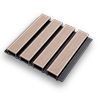
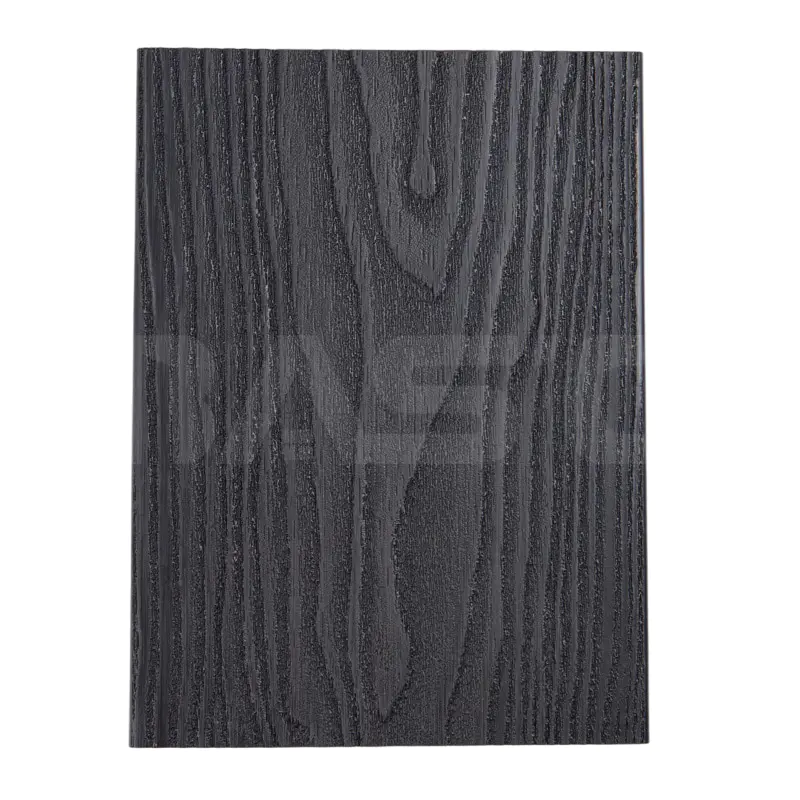 3D Deep Embossed Non-Slip Composite Decking BoardDeep-embossed WPC board with an anti-slip face, UV resistance and low maintenance, suited to family decks where grip and easy cleaning matter.View Product →
Roof terraces and balconies
Weight and drainage drive the decision here. Hollow profiles and adjustable pedestals keep the structure light and let water run beneath the surface instead of sitting on it.
The Hidden Half of the Chart: Joists, Clips and Trim
Decking comparisons usually stop at the board, which is a bit like comparing cars by paint colour. The joist system sets the height, the span and the ventilation under the deck; the clip system sets the gap, the speed of installation and how tidy the finished surface looks.
A 40 × 25 mm WPC joist paired with a concealed clip gives you consistent 4–6 mm gaps, no visible screw heads and a deck that can be laid by two people in a weekend. It also protects the board warranty, because most manufacturers will ask how the deck was fixed before honouring a claim.
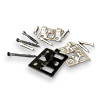
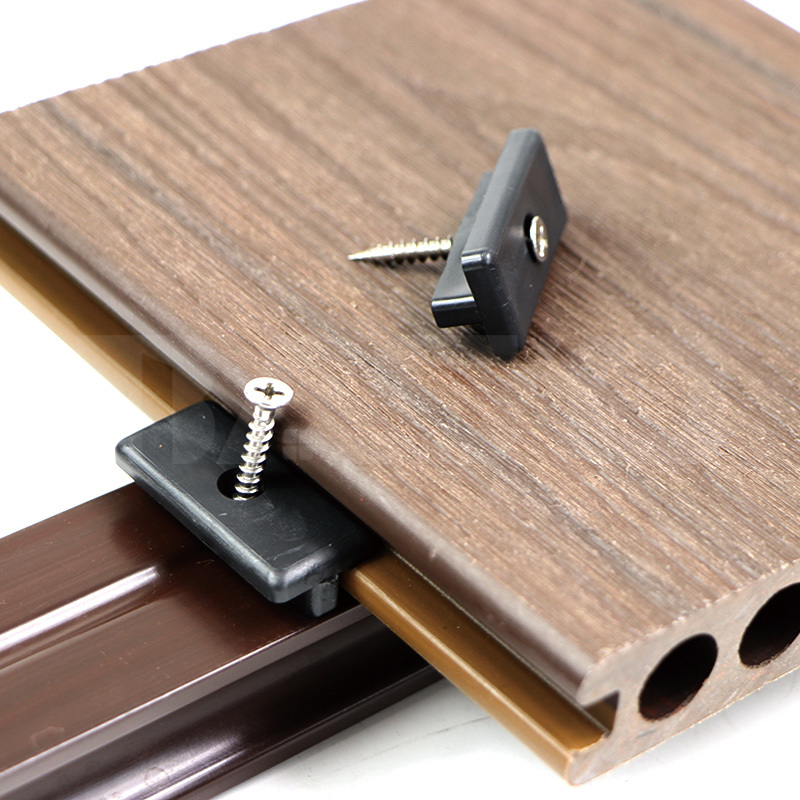 Concealed Decking Clip System for WPC BoardsPP hidden clips create a 6 mm ventilation gap and conceal fixings, useful for a neat, consistent deck build and straightforward installation.View Product →
Budget for trim as well: edge boards, starter clips and corner pieces are small line items that decide whether the perimeter looks deliberate or improvised.
Building Your Own Comparison Chart in an Afternoon
- List the three or four board families you are genuinely considering, not ten brands.
- Fill in dimensions, structure and recycled content from the spec sheets.
- Add the fixing method and the joist spacing each board requires.
- Price the whole assembly — boards, joists, clips, trim, fixings — per square metre.
- Add a maintenance line: hours per year and the cost of products.
- Score each row against your climate, traffic and budget, then delete the rows that lost.
What usually survives is one obvious choice and one sensible fallback. That is a better outcome than a spreadsheet with fifteen tabs.
If it helps, our own about page explains how we build to order, what our twenty-odd production lines can and cannot do, and why we keep asking buyers for the joist spacing before quoting a board. A comparison chart is only a tool; the deck is what you actually live with.
Our News //
Related News


-
Email: [email protected]
Email: [email protected] -
Tel: +86 13732382108
Tel: +86 18705821696 -
 BLDG#1, LONGOUANWU ECO-INDUSTRIALPARK, MIAOXITOWN, WUXINGDISTRICT. HUZHOU. CHINA

Quick Links
Products Center
Copyright © 2025 Huzhou Baosheng New Material Co., Ltd.All Rights Reserved. Composite Decking Manufacturers Composite Cladding Factory
